Migration Alert: As Central Flyway Thaws, Light Geese Push North
Feb. 17, 2026 – Central Flyway Light Goose Conservation Order
Feb. 17, 2026 – Central Flyway Light Goose Conservation Order



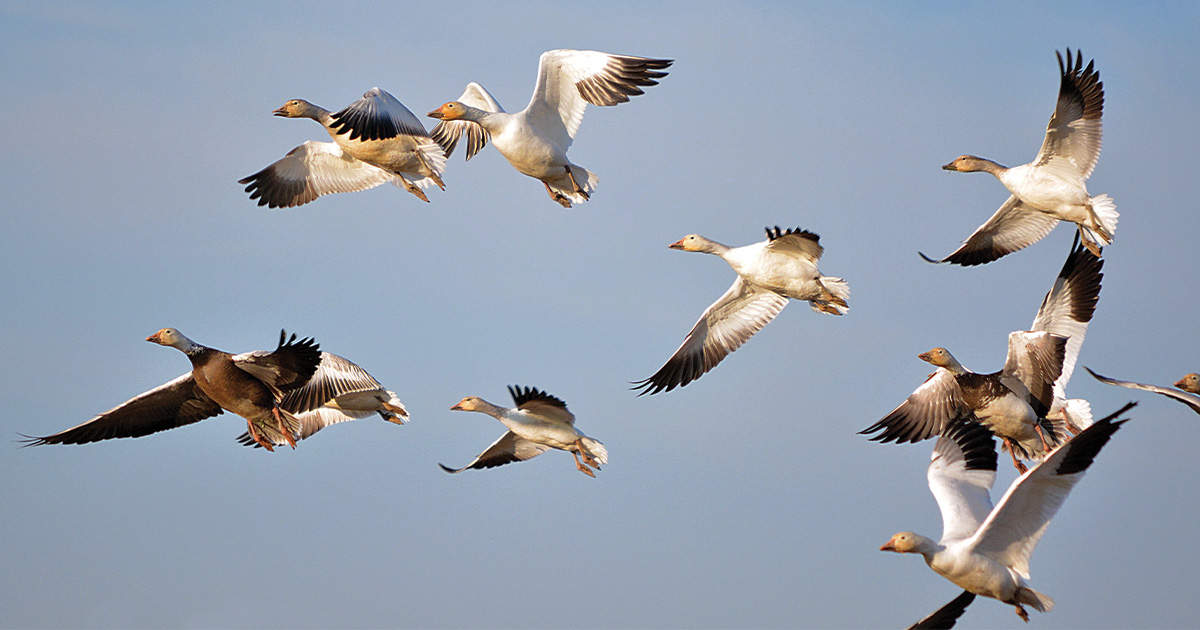
The spring migration of light geese in the Central Flyway is always a bit of a roller coaster due to highly variable weather conditions in the nation’s heartland. This year, ice and snow delivered by a late-January winter storm pushed many geese farther south, but a February thaw now has the birds on the move north again.
The latest waterfowl survey at Loess Bluffs National Wildlife Refuge near Mound City, Missouri, shows a significant uptick in light goose numbers since early February, and more birds are continuing to arrive from the south.
“Things are moving quick for sure,” reports Tony Vandemore with Habitat Flats near Sumner. “It seems like the geese that stayed on the north side of the big cold front in January are well past us, and the geese that were caught in the bullseye of the storm pushed way south. With the warm-up, the birds are rolling by fast, but the good thing is that there are still plenty to come.”
Snow goose numbers are also building along key staging areas in Nebraska, reports hunter and photographer Doug Steinke. “I just did a drive along the Platte River Valley this morning and saw good numbers of snow geese. They are really starting to show up in the Rainwater Basin as well,” Steinke says. “The sandhill cranes are moving in too.”
The above-average temperatures expected this week will help melt what ice remains on lakes and other larger bodies of water, Steinke says. The availability of open water extends well into South Dakota, where the first migrating flocks have already been spotted moving along the Missouri River.
These conditions may set the stage for a quick-moving migration of light geese across South Dakota this spring, but veteran snow goose guide Ben Fujan remains optimistic that the redistribution of geese caused by January’s winter weather may string out the migration.
“You look at where a lot of the birds are right now—with numbers growing in Missouri and northeast Arkansas and southern Illinois still holding a lot of birds—there may be enough of a gap to make it closer to a typical migration,” Fujan says. “And there’s a lot that can happen in the coming weeks in terms of snow and cold that could change the game again.”
Stay up to date with the latest migration information.

Share this photo


Ducks Unlimited uses cookies to enhance your browsing experience, optimize site functionality, analyze traffic, and deliver personalized advertising through third parties. By continuing to use this site, you agree to our use of cookies. View Privacy Policy