Migration Alert: Light Geese Surge Into South Dakota
Mar. 10, 2026 – Central Flyway – Light Goose Conservation Order
Mar. 10, 2026 – Central Flyway – Light Goose Conservation Order



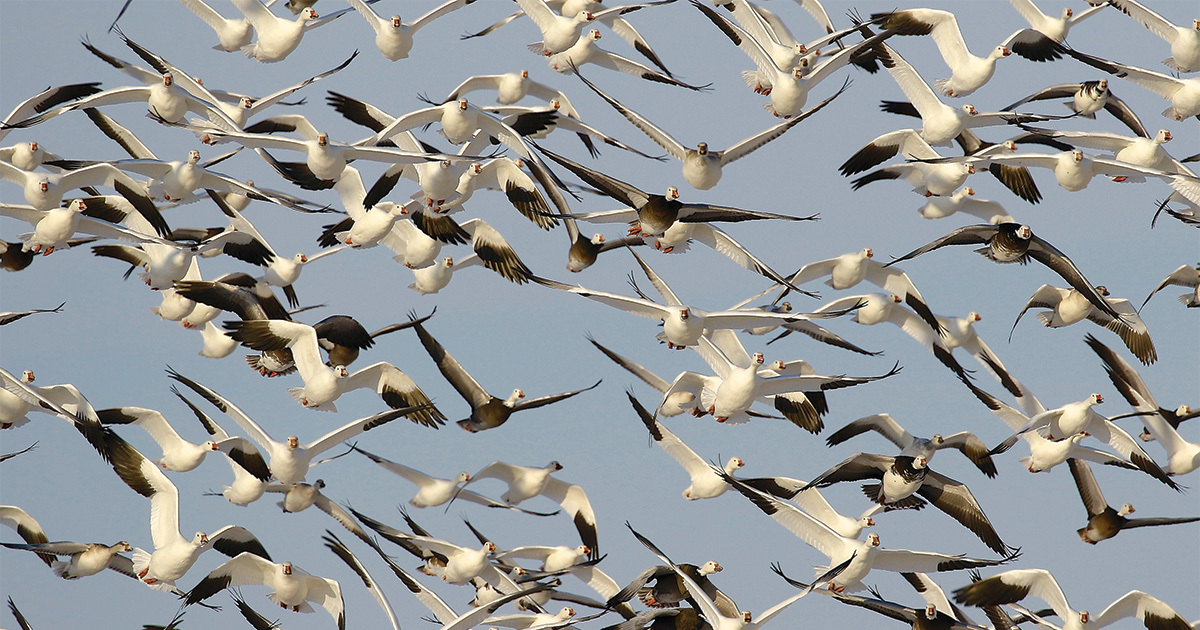
Warm temperatures, strong south winds, and the absence of snow cover are all helping power a massive surge of light geese into South Dakota. Adult geese at the leading edge of the migration are acting like the wise, old birds that they are, but hunters are still finding success decoying flocks of geese eager to feed and find some rest as they move north.
The skies over the eastern half of South Dakota have been busy the past 48 hours, as the door was finally blown open for light geese migrating north through the Central Flyway.
“The flight of birds has been almost nonstop,” says Rocco Murano, South Dakota Game, Fish and Parks senior waterfowl biologist. “Day and night, geese are on the move. Snows, specks, Canadas—it’s hard to step outside and not hear or see birds in the air.”
Murano says that his staff are seeing light goose movements across a wide swath of eastern South Dakota, but the Highway 81 corridor is again proving to be a main artery of the migration.
A wintery mix of snow and ice over the weekend had geese retreating south, but warmer temperatures have since erased any evidence of those winter conditions. With widespread open water and little to no snow cover in the state, Murano says the stage is set for a fast-paced migration.
“I know there is still ice, thick ice, up in North Dakota, but without any snow, there isn’t much to slow down the birds as they move north,” Murano says.
With strong numbers of light geese still being reported in Nebraska and points south, there are still plenty of birds to come, which is good news for hunters in South Dakota. So, too, is a short-term weather forecast that calls for moderating temperatures, winds switching back to the north, and even chances for rain and areas of light snow.
South Dakota veteran guide and hunter Ben Fujan says that the fluctuating weather conditions should be enough to help pump the brakes on the migration through the state.
“There’s just enough of a change in the weather that I think we’ll see things slow up a bit,” says Fujan. “And reports from down south tell me that there are plenty of birds yet to come, so I’m pretty optimistic about the next couple of weeks.”
Stay up to date with the latest migration information.

Share this photo


Ducks Unlimited uses cookies to enhance your browsing experience, optimize site functionality, analyze traffic, and deliver personalized advertising through third parties. By continuing to use this site, you agree to our use of cookies. View Privacy Policy