Migration Alert: Mid-Latitude Light Goose Hunters Preparing for Big Numbers
Feb. 26, 2026 – Mississippi Flyway – Light Goose Conservation Order
Feb. 26, 2026 – Mississippi Flyway – Light Goose Conservation Order


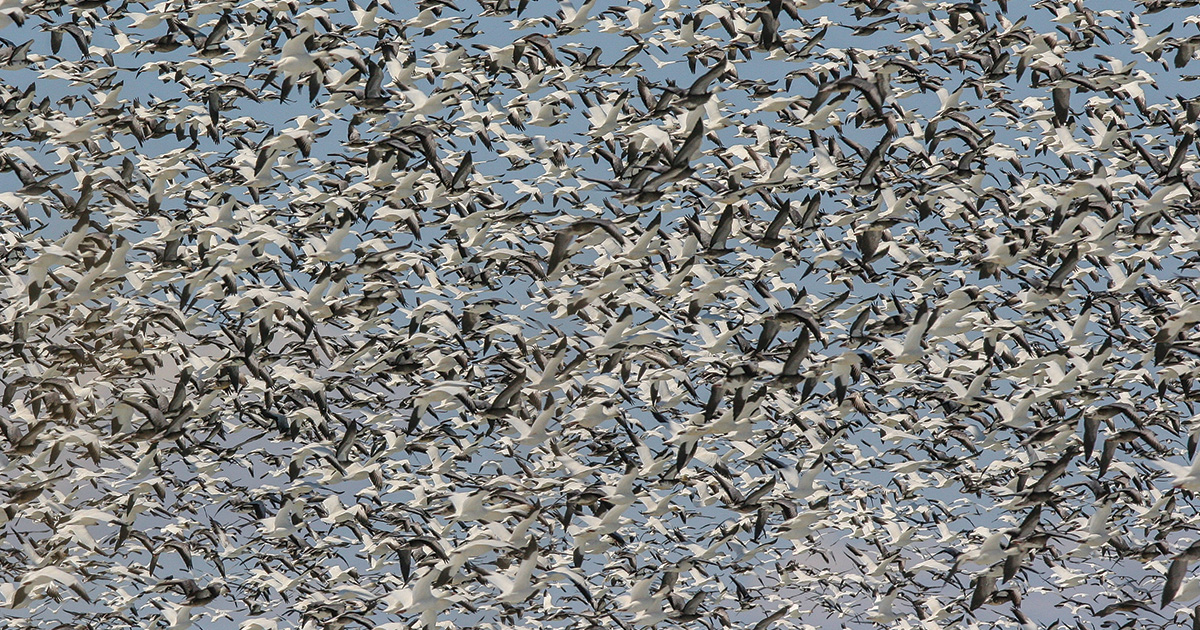
The first month of the 2026 Light Goose Conservation Order has been a wild ride. Snow and Ross’s geese have been traversing up and down the Mississippi Flyway for weeks, as major winter weather systems forced them into the Deep South only to be followed by a warm-up and strong south winds, which pushed them back north.
While the majority of the midcontinent population of snow geese congregated in the lower Mississippi Alluvial Valley, reports of light geese extended hundreds of miles to the north. Typical snow goose hotspots have reported increasing numbers in the past ten days, with pockets scattered throughout Illinois, Indiana, Missouri, and as far north as Iowa.
Tracy Northrup of Up North Outdoors has been hosting goose hunters in east-central Arkansas since the opener. He reports that for much of February the hunting was excellent although recently the birds have gotten stale.
“The hunting has really slowed down since Sunday after that cold front pushed through,” Northrup explains. “There are plenty of little feeds around, but the birds just aren’t decoying, and we haven’t seen any real migration since Saturday. The weather looks good for the next few days, but you know how that goes, what looks ‘good’ to us doesn’t always look good to the geese.”
Northrup is poised to make a move early next week. There’s no doubt that heavily pressured areas are experiencing a lull, but warm weather and rain in the forecast could shake things up. Next week’s weather is perfect across a large swath of the Mississippi and Central Flyways, including prime snow goose country in Missouri, Illinois, and Iowa. Hunters should expect a substantial push of birds as the weather permits.
“We’ve lost a noticeable portion of our main concentration of snow geese in the area following the most recent cold snap, with numbers now sitting around 60 to 70 percent of what we saw at peak,” says Matt Albers of Willow Creek Waterfowl in Illinois. “Juvenile numbers have dipped, while Ross’s goose numbers have increased.”
“In my opinion, some birds continued pushing north regardless of the weather, while others shifted slightly south and west,” Albers adds. “As we move into the upcoming warm-up, I expect some of these dynamics to change. However, with late February giving way to March, migratory instincts are clearly taking hold. If conditions continue, I believe birds will likely move north quickly and decisively.”
Staff at Loess Bluffs National Wildlife Refuge near Mound City, Missouri, surveyed nearly 1 million snows in their weekly count. The majority of those birds are adult geese, which are notoriously difficult to coax into shotgun range. Tony Vandemore at Habitat Flats is patiently waiting for more juvenile snow geese to push into the area.
“We have a decent number of snow geese around, but hardly any of the young ones yet,” says Vandemore. “Adults have been racing north, but the young birds seem to be dragging. I’m guessing that storm a month ago had them really stressed.”
Vandemore’s observations appear to track with other recent hunter observations. With the buffet line now open in harvested grainfields, those geese will soon be back on track for the next phase of the migration to the north and west.
Stay up to date with the latest migration information.

Share this photo


Ducks Unlimited uses cookies to enhance your browsing experience, optimize site functionality, analyze traffic, and deliver personalized advertising through third parties. By continuing to use this site, you agree to our use of cookies. View Privacy Policy