Migration Alert: Snow Goose Hunters Prepare for Quick Push North as Weather Warms
Feb. 4, 2026 – Light Goose Conservation Order
Feb. 4, 2026 – Light Goose Conservation Order


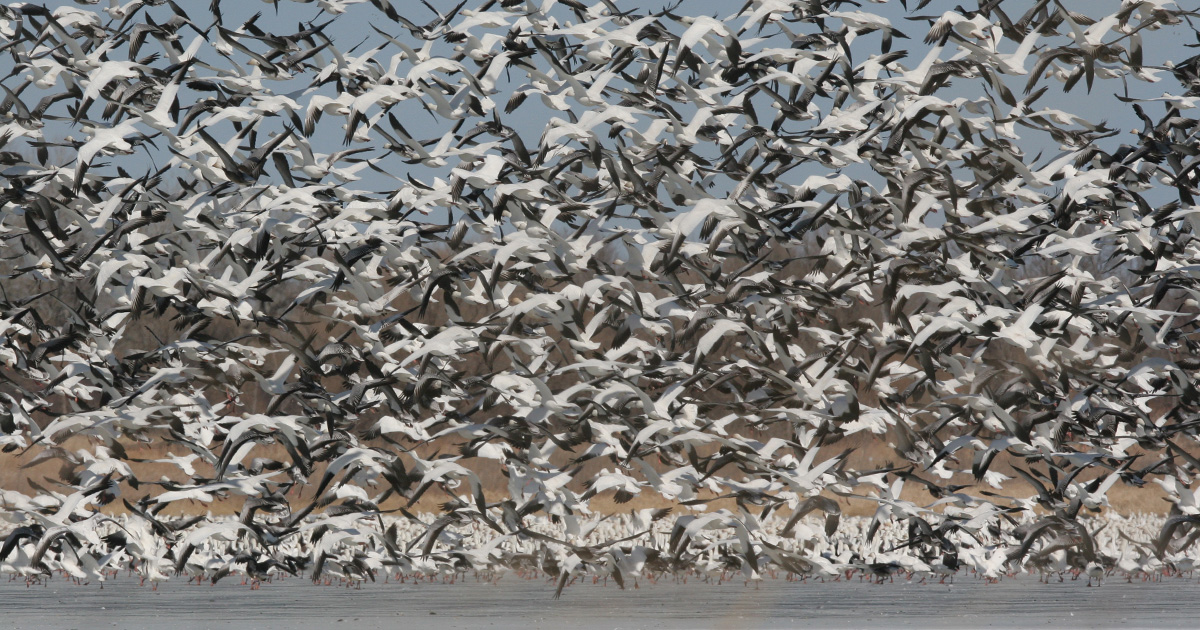
The 2026 Light Goose Conservation Order season is already under way in many states, and this season is proving to be a lesson in the importance of the snow and ice line for goose distribution. The recent winter storm that struck much of the middle part of the country had a somewhat predictable impact on snow goose concentrations. Besides frigid temperatures, snow depth eventually proved to be insurmountable for even the hardiest of snow geese.
While areas such as southern Illinois and Indiana and western Kentucky were holding mobs of snow geese as recently as last week, eventually the big push was on, and the birds headed back south en masse, resetting the migration.
While much of Arkansas was also hammered by the storm, the snow line cut through the state on a northwest to southeast line. Presently, snow geese are concentrated primarily in the southern half of the state, especially in the Grand Prairie region. This means the typical winter hotspots are holding excellent numbers of birds, while many also continued southward.
“There are good numbers of birds in this area, but I think we are very near the snow line,” reports guide Jeremy Ullman. “There is a lot of hunting pressure and we’re working with adult birds, but we’re doing pretty good, with 99 and 61 birds the past two days respectively.”
Further north, where only two weeks ago snow geese were staging in impressive numbers, current conditions are akin to the Arctic. Reports indicate millions of snow geese that were concentrated in the Mississippi and Ohio River Valleys, as well as their tributaries, pushed south when the going got too rough.
While the long-term weather forecast could change, a general warming trend is likely throughout the middle part of the country over the next 10 days. This includes warm conditions for much of the South, and temperatures well-above freezing extending hundreds of miles to the north, all the way to the Great Lakes and Dakotas.
“There are still a handful of wintering snows around,” says Tony Vandemore, of Habitat Flats in Missouri. “Not many; maybe10,000 or so. From what I’ve heard, the snows went a long way south this go around, but it won’t be long!”
This is just the sort of scenario antsy adult snow geese are notorious for taking advantage of as they quickly fill up primary staging areas such as Illinois and Missouri, while juvenile snow geese hugging the Gulf Coast jump into Arkansas rice country to take their place.
“Currently, I’m keeping my operation shutdown due to conditions,” says Matt Albers of Willow Creek Waterfowl in southern Illinois. “We have a few small holes open on the lake, with very few birds that managed to stick around and ride out the snowstorm. We expect to see good numbers show up pretty quickly beginning this weekend as temperatures warm up.”
Leading edge adults are notorious for probing further north quickly, dragging some juveniles along with them when young birds are abundant, and by all measures last year’s hatch was tremendous. This is a good thing for hunters who want to get out and give those early flocks a whirl. Savvy snow goose hunters know that with the incoming weather, the expectation for big changes is imminent over the next two weeks.
Stay up to date with the latest migration information.

Share this photo


Ducks Unlimited uses cookies to enhance your browsing experience, optimize site functionality, analyze traffic, and deliver personalized advertising through third parties. By continuing to use this site, you agree to our use of cookies. View Privacy Policy