Saskatchewan Skies
The airspace over this prairie providence can get very crowded during the fall migration
The airspace over this prairie providence can get very crowded during the fall migration



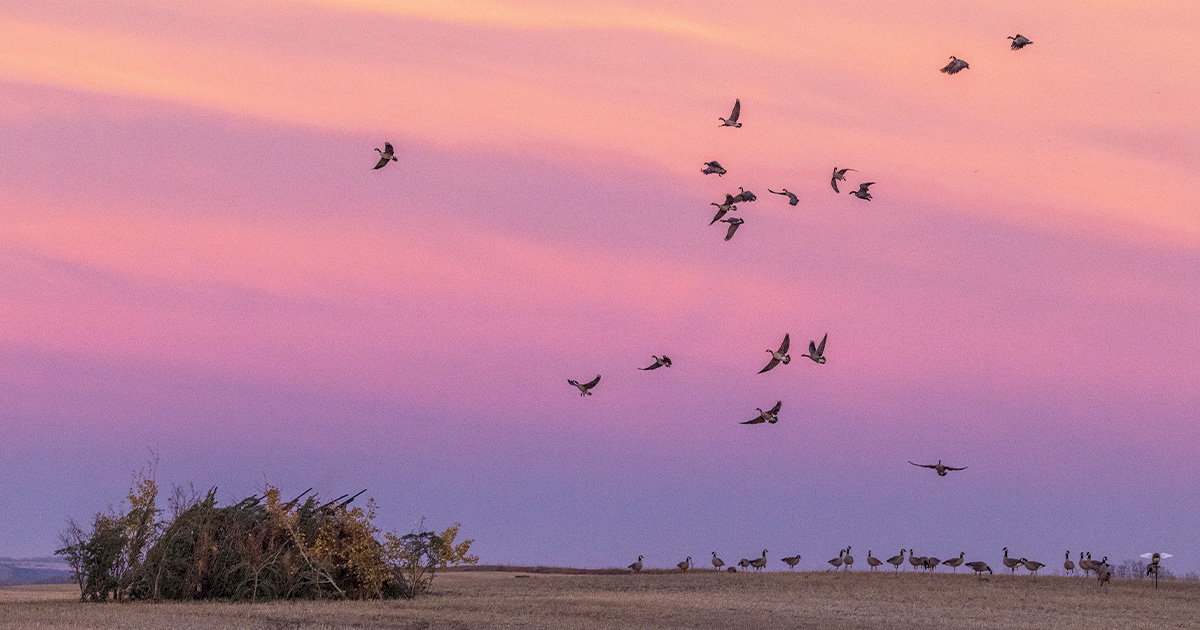
A perfect mature drake wigeon kept weaving in and out of a large formation of Canada geese swinging over the decoys. The “cotton top” never offered a shot that wouldn’t endanger a collateral goose, and having already reached our limits of dark geese that morning, we could only sit back and watch as the flock of little geese—and the wigeon—landed among our field decoys. They were soon followed by other flocks of geese, which stacked up in the stubble beyond the spread until there were hundreds of the birds in the field.
The sight of geese working the decoys never gets old, but we did have a duck hunt to get back to. When we had watched the geese long enough and taken enough video footage with our cell phones, guide Darren Hemker sprang out of the blind and shooed off the geese. They rose in a clamor of wings and indignant, high-pitched honks before forming into bunches and flying off in all directions. With the field cleared of geese, we were free to peck away at the mallards and pintails that intermittently visited the spread until dark.
While that hunt may have been the highlight of my trip, honestly all three days of my visit to Saskatchewan played like a highlight reel. Barcley Fisher, owner of Quickload Waterfowl Outfitters, grew up in the area just east of Lloydminster, where today he operates his outfitting business. He knows the land and local landowners well, and his crew worked hard to put us on birds morning and afternoon throughout our late-October visit.
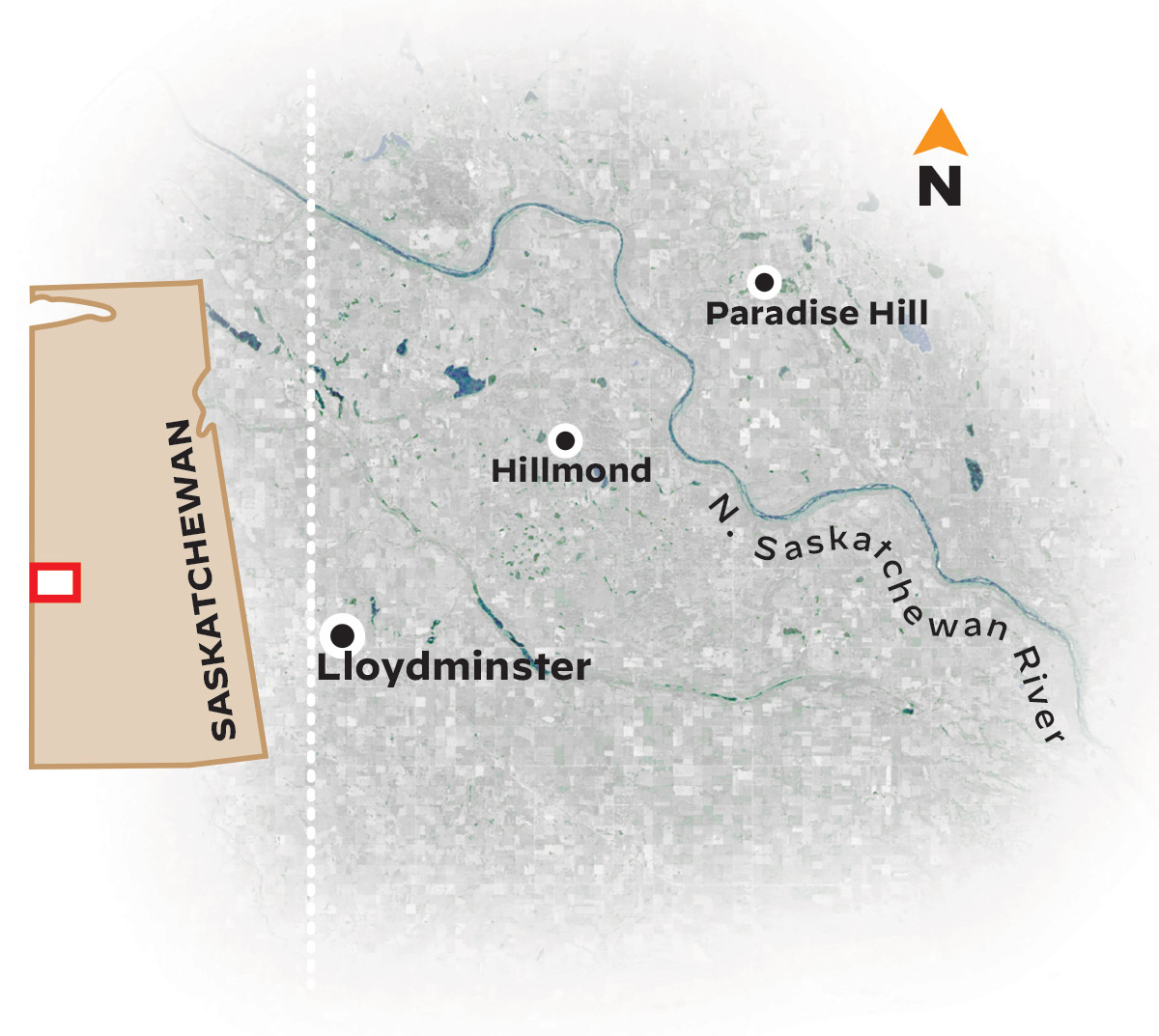
Migrating ducks and geese swarm to the potholes and grainfields of Saskatchewan. For waterfowlers who want to be where the action is, it’s difficult to think of a better place.
The town of Lloydminster sits astride the Alberta-Saskatchewan border in the heart of one of the continent’s most heavily traveled waterfowl migration corridors. The surrounding landscape is also dimpled with high densities of prairie potholes, which, when they hold water, raise tremendous numbers of local geese and ducks. Geese from the Arctic and ducks from the Boreal Forest join locally hatched birds to stage and feed in the grainfields spread across a landscape that’s rolling enough to border on hilly. There is no shortage of waterfowl food in the vast expanses of wheat, pea, and barley fields interspersed with cattle pastures. The glacially fed North Saskatchewan River serves as a refuge where birds can loaf and roost without being disturbed.
Ducks and geese swarm here in numbers that American hunters can have a hard time grasping if they haven’t been here before. Barcley is a master of under-promising and over-delivering. “We’ve got a field with some dark geese in it,” he told us after dinner at the lodge the night before our first hunt. “You’ll shoot some birds in the morning.”
We arrived at the field early the next morning in a convoy of vehicles. A native of Illinois, Darren doesn’t subscribe to the idea that geese in Canada aren’t as wary as the birds back home. To reduce the number of tire tracks in the frosty wheat stubble, he drove only his truck and trailer into the field. The rest of us rode either in the cab or in the pickup bed.
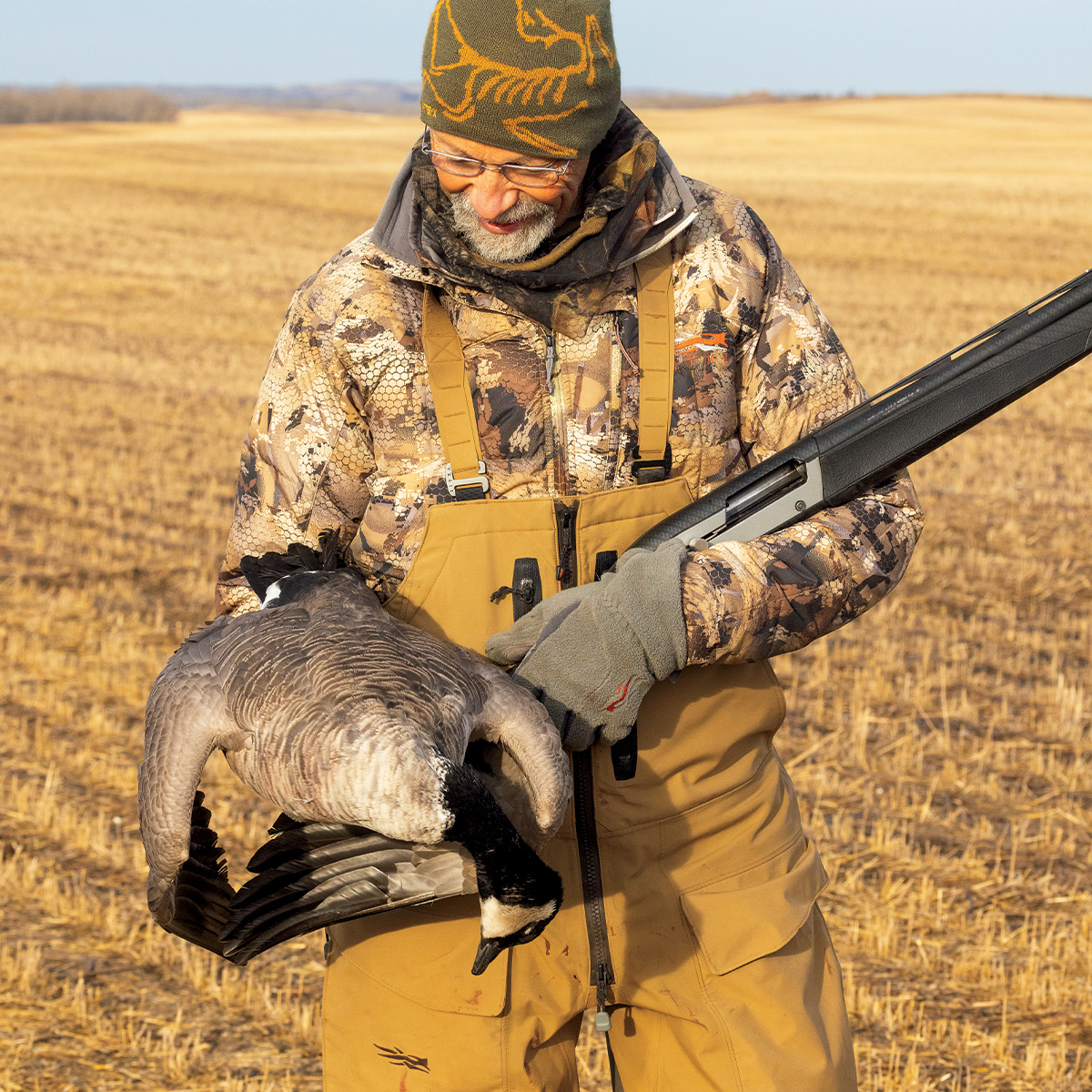
The author admires one of many lesser Canada geese taken during his three-day hunt.
The trailer contained two A-frame blinds, along with freshly cut aspen, evergreen, and Saskatoon berry branches for camouflage. After we covered them with brush, the low-profile blinds looked like harmless clumps of vegetation. Next, we set seven dozen full-body Canada goose decoys in a loose V formation with the opening facing downwind, forming a landing zone about 25 yards from the blinds. As an added enticement, Darren set a Higdon Clone goose flapper in the hole.
The first geese of the day, a group of five lesser Canadas, pitched into the decoys not long after shooting time. Since it was the first group, I resisted lifting my head up for a peek as they came in. When Darren called the shot, the geese were almost within spitting distance of the blinds. Between my surprise and fumbling with the right-handed safety on my borrowed Browning Maxus, I was still getting the gun up when all five birds fell a few yards from the blinds. The missed opportunity didn’t matter. Geese kept coming, and we filled our individual limits of dark geese—lesser Canadas plus a few specklebellies—with only two birds to spare for the entire group. Barcley later admitted that there had been about 3,500 birds in the field the night before.
That afternoon was for the ducks. We set the same spread, minus the Clone, on the side of a sizable hill overlooking a marsh. Ducks came to the goose decoys from all directions. They’d appear as dots in the distance, and nearly all of them wound up in the same place, cupped up over the decoys, coming in from left to right. The fully colored-up drake mallards and pintails came in stark contrast to the misconception that all ducks in Canada are brown.
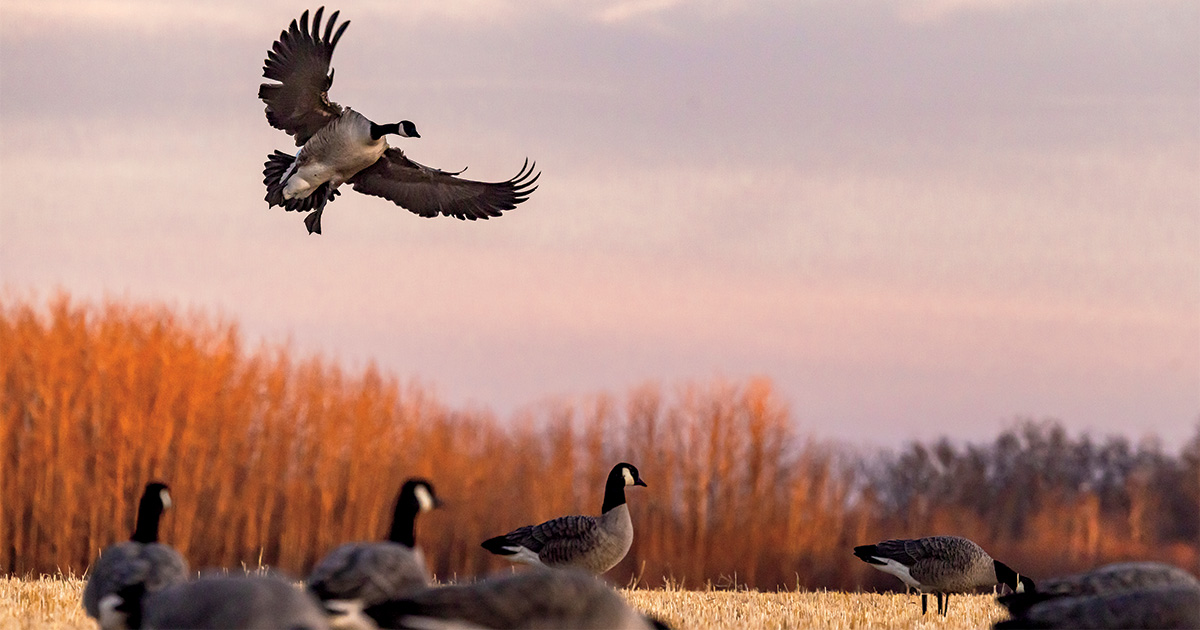
When you hunt the fall migration on the Canadian prairies, you’re often getting the first crack at birds that are just beginning their southward journey. Geese with feet down over the decoys are a common part of the scenery.
While the early-season shooting in the area is excellent, the migration typically peaks in mid-October. During our late-October visit, we shot mainly lesser Canadas and mallards, with a few specks, pintails, and wigeon mixed in. Most of the local giant Canadas were gone. Perhaps that was just as well, as the second morning we dropped a 10-pound honker onto one of the blinds, sending its occupants scrambling and collapsing one of the sides.
Our last day started with a goose hunt in the rain. Geese in Canada, just like geese in the United States, will always join the feed next door rather than come to a decoy spread set where the birds fed the night before. And, just like back home, you might still shoot a few geese that drop in on the way to the feed or a couple coming back. The difference is, in Canada, even on a slow day you still end up with what would be more than a limit back home. With 20 or so dark geese total in our individual bags, we called the hunt ahead of an approaching storm. We got the decoys and blinds into the trailers and swept the field for hulls and wads (local farmers hate finding wads in their fields) just as the downpour began.
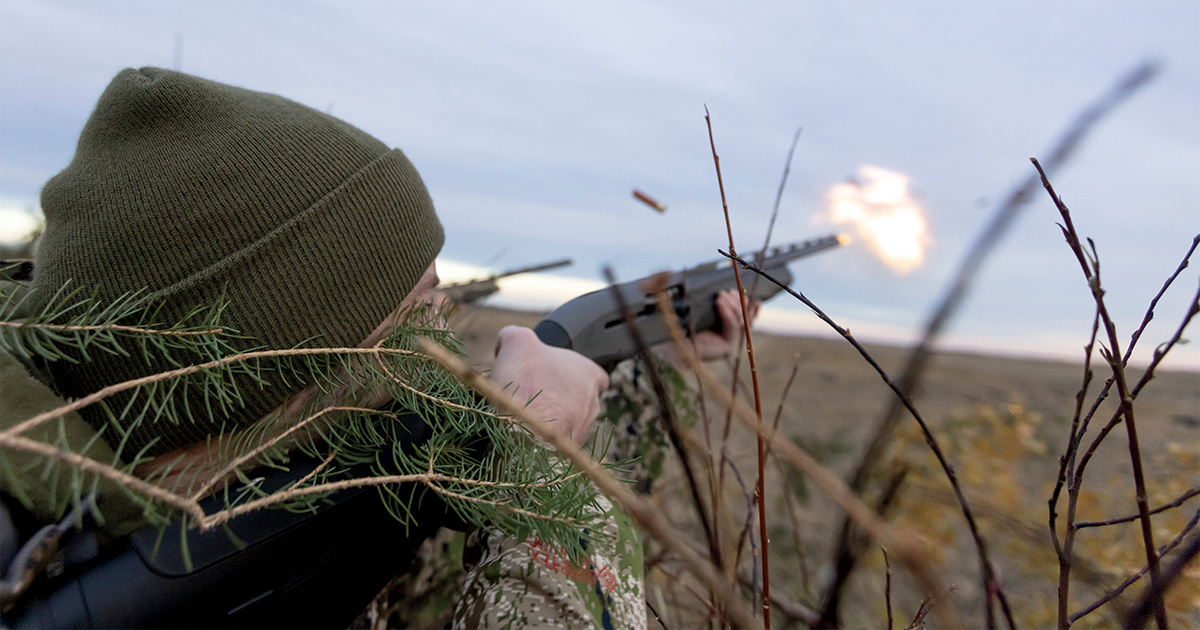
In many ways, hunting in Canada is not much different than hunting in the United States. There is predawn blind-brushing and decoy-setting to be done, pastoral scenery filled with wildlife, and fast action in the blind. But there are indications—the metric system, for example—that you’re not in Kansas anymore.
The afternoon hunt took place in a field near an upgrader, an industrial facility that refines the region’s thick crude into synthetic oil. After five hunts in what seemed like the middle of nowhere, this setting was more like the places I hunt back in Iowa. But I was soon reminded that we were still in Saskatchewan. Before Darren had time to return from parking his truck and trailer, a flock of specklebellies came in low and silent. As the first to spot them, I got to play the role of guide, ordering everyone to get down, giving the play-by-play as the birds approached, and finally calling the shot as the specks backpedaled over the spread.
From that moment on it was a nonstop mix of specks, lesser Canadas, and ducks under a clearing sky. As the birds worked into the spread, the late-afternoon sun illuminated them like they were plugged into a socket. As we took pictures of our birds and picked up after the hunt, all I could think about was when I might come back again. Saskatchewan promises a lot, and most of the time, it delivers.

Share this photo


Ducks Unlimited uses cookies to enhance your browsing experience, optimize site functionality, analyze traffic, and deliver personalized advertising through third parties. By continuing to use this site, you agree to our use of cookies. View Privacy Policy