Welcome, Hunters. You’re Invited to the Hunt of a Lifetime.
With ample public lands, hunter-friendly accommodations, and a proven track record as the top duck-producing state, North Dakota is a premier destination for waterfowl hunting
With ample public lands, hunter-friendly accommodations, and a proven track record as the top duck-producing state, North Dakota is a premier destination for waterfowl hunting


This article is provided by North Dakota Tourism as part of a Sponsored Content program. Ducks Unlimited editorial staff played no role in creating this content.
North Dakota is a premier destination for waterfowl hunting, with steady duck populations setting up an excellent season ahead. Each year, state wildlife experts conduct comprehensive surveys to monitor waterfowl numbers and habitat conditions, ensuring sustainability for generations to come. The North Dakota Game and Fish Department’s 78th annual spring breeding duck survey showed an index of about 2.9 million birds, down from 3.4 million birds in 2023. The 2025 breeding duck index was the 30th highest on record and stands at 17% above the long-term (1948-024) average.
North Dakota’s 5 million acres of public land draw hunters from across the country.
Welcome to the heart of the Central Flyway, where North Dakota serves as a vital stopover for millions of migrating birds. The region’s wetlands and prairie potholes remain essential breeding grounds for species such as mallards, pintails, teal, and gadwalls. The state’s wetland numbers remain steady, ensuring abundant opportunities for hunters.
From early-season teal and wood ducks to late-season mallards and Canada geese, North Dakota delivers unmatched hunting experiences. Whether you prefer pass shooting along winding rivers or setting decoys in the vast prairie potholes, you’ll find action-packed mornings and unforgettable hunts.
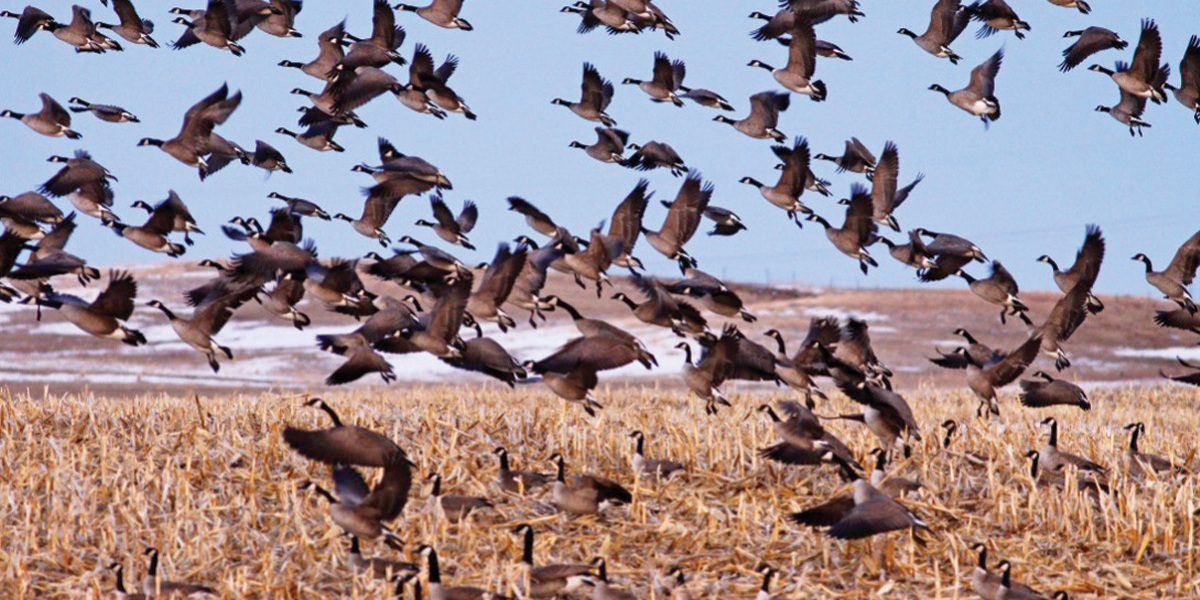
North Dakota is a waterfowl superhighway. Learn more.
North Dakota is home to a wide range of waterfowl species, each offering unique hunting opportunities. Duck species are diverse in North Dakota, with daily and possession limits on mallards, scaup, wood ducks, redheads, pintails, canvasbacks, blue-winged teal and mergansers.
The Game and Fish Department’s 2025 brood survey showed a continued downward trend in the state’s most high-profile species including a drop in mallards (-26%), Northern pintails (-22%), and blue-winged teal (-15%). Despite the decline, bluewings numbering 685,483 remained the most numerous breeding ducks in the state, followed by gadwalls and mallards. Amid the declines, diving ducks show an upward trend in the most recent brood count. Redhead ducks set a record at 295,424, up (+23) percent from last year and were 136% above the long-term average. Canvasbacks climbed nearly (+14%) to 59,770, while scaup were up (+26%) to 188,025. Although numbers for some major species are down, Game and Fish believes that favorable wetland conditions this spring could still support strong duck production.
Following 2022’s record number of Canada geese in breeding areas, and 2023’s numbers at a 23% decrease, the most recent survey showed numbers are consistently strong and excellent hunting opportunities persist for Canada geese, Ross’s geese, and light geese, including snow and blue geese.
Hunters can also pursue tundra swans and sandhill cranes, though special permits are required. Tundra swans have a one-bird bag limit through a lottery system.
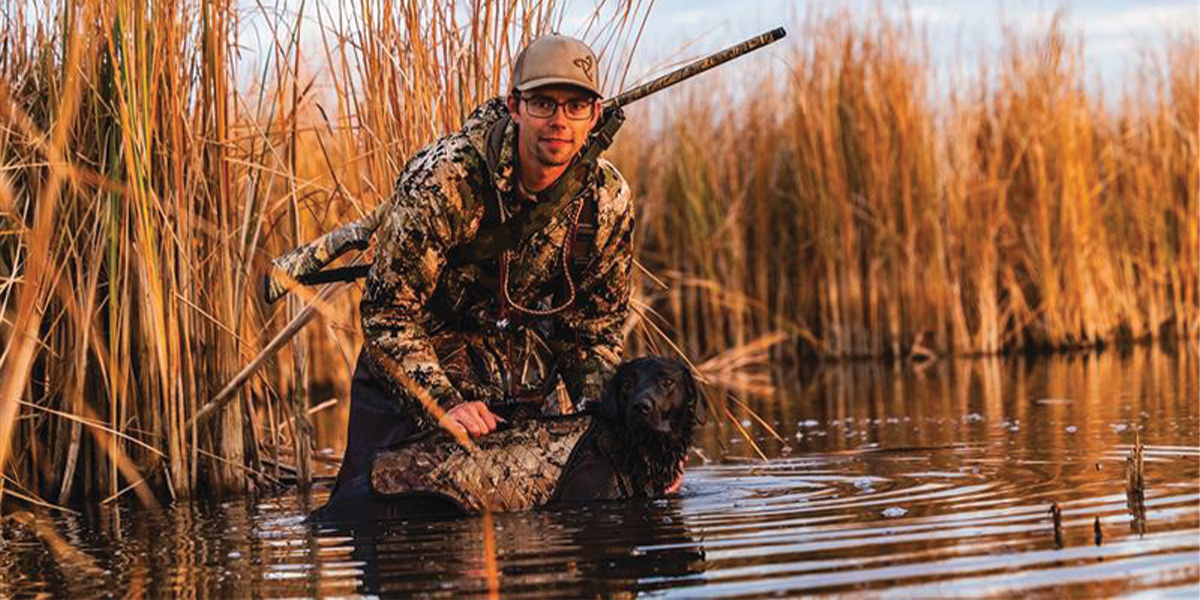
With so many species, North Dakota is where the duck hunting action is. Learn more.
North Dakota offers extensive hunting access, including wildlife management areas, PLOTS (Private Lands Open to Sportsmen), state school lands, and 263,000 acres of waterfowl production areas. Up-to-date maps and property listings are available through the North Dakota Game and Fish website and hunting apps like OnX Hunt and Avenza.
Private land access follows state regulations: hunting on legally posted lands requires landowner permission, while unposted lands remain open unless otherwise restricted.
Non-resident waterfowl seasons typically open in early October, with an early Canada goose season launching in mid-August. Official season dates are announced in August by North Dakota Game and Fish.
For ducks and mergansers, the daily bag limit remains six, with species-specific limits such as five mallards (two hens max), three wood ducks, two redheads, and one pintail. The possession limit is three times the daily bag.
For online licensing, map resources, proclamations and guides, visit the North Dakota Game and Fish website. Hunters can also find outfitters, lodging, and hunting services through North Dakota Tourism.

This content is a paid advertisement from North Dakota Tourism.
This article is provided by North Dakota Tourism as part of a Sponsored Content program. Ducks Unlimited editorial staff played no role in creating this content.

Share this photo


Ducks Unlimited uses cookies to enhance your browsing experience, optimize site functionality, analyze traffic, and deliver personalized advertising through third parties. By continuing to use this site, you agree to our use of cookies. View Privacy Policy