A Quest for Cacklers
For the goose aficionado, a late-season trip to the Pacific Northwest offers spectacular hunting for a variety of white-cheeked subspecies
For the goose aficionado, a late-season trip to the Pacific Northwest offers spectacular hunting for a variety of white-cheeked subspecies

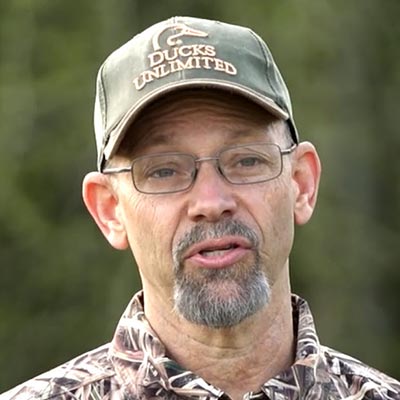


The Pineapple Express and I arrived simultaneously in Oregon’s Willamette Valley, and now a river is running through my layout blind. It’s late February, and DU Regional Biologist Kelly Warren, in the layout next to me, agrees that it’s time to move to higher ground. We’re reluctant to leave a great hide, tucked into weeds on the bank of what had been a trickle earlier in the morning. By now, though, the muddy water has risen high enough that I can’t see the floor of my blind.
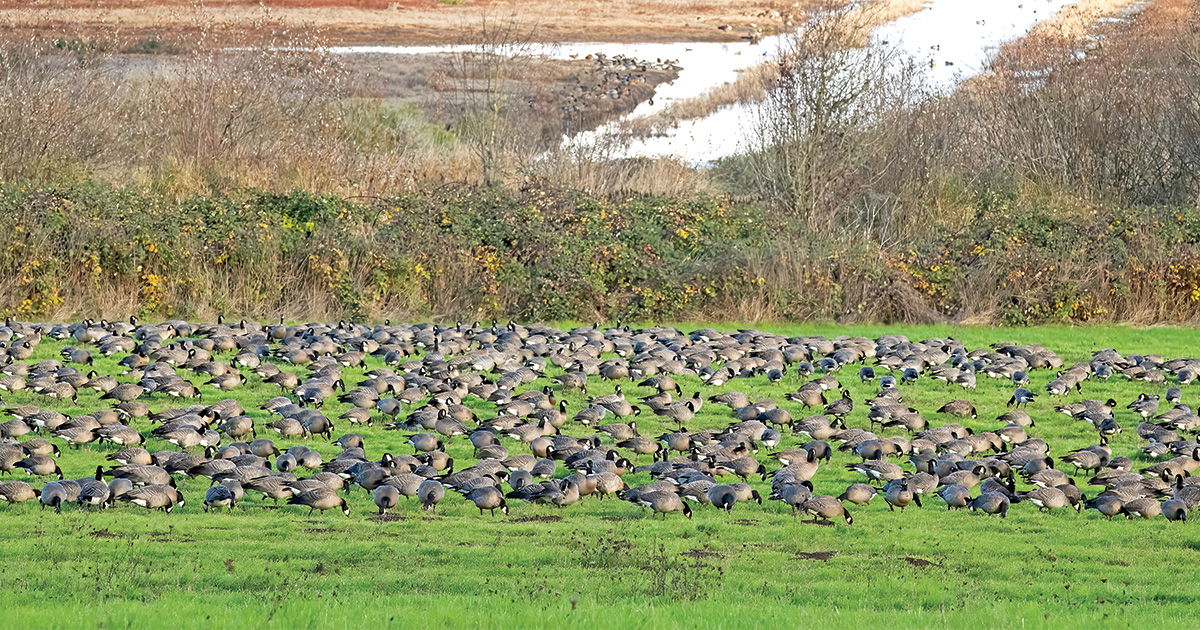
We dump the water from the blinds, drag them onto a nearby hump, tuck them into the grass, and resume our vigil. We’re waiting on cackling geese. About 10,000 of them are sitting on the refuge just across the road. To compete for the attention of any geese that pass by, we’ve got 21 dozen full-bodies in a field of fescue. The spread contains decoys that imitate six of the seven white-cheeked goose subspecies found in the Willamette Valley—cacklers, Aleutian cacklers, Taverner’s cacklers, dusky Canada geese, lesser Canada geese, and western Canada geese. The only decoy that’s missing is the Vancouver Canada goose, but it is a rare visitor to the valley.
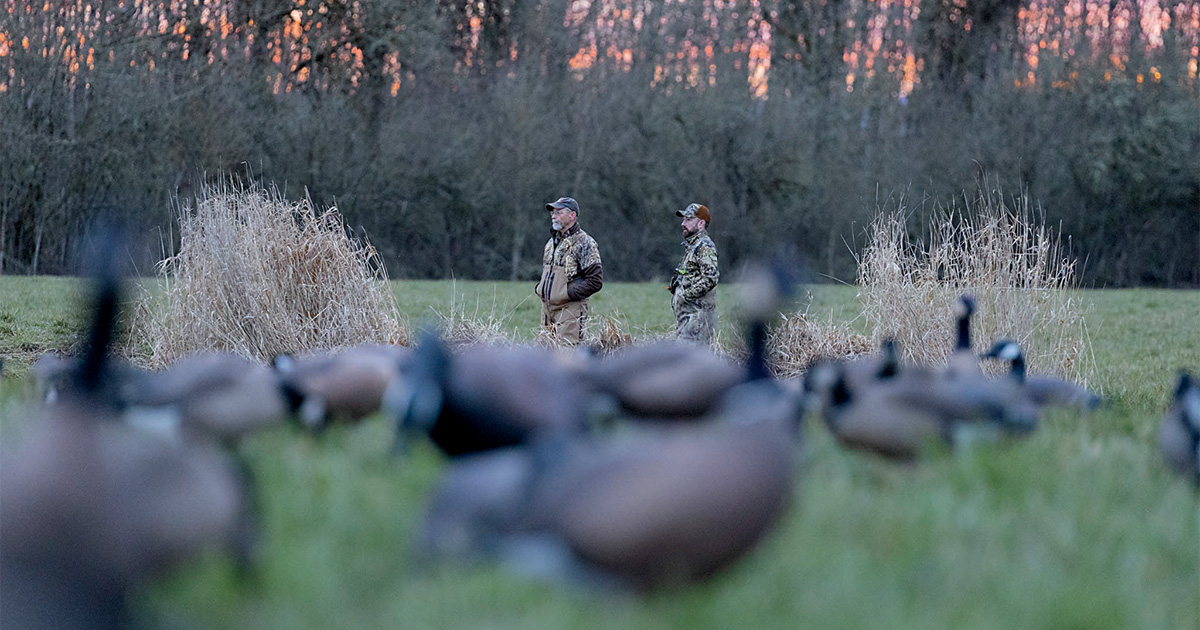
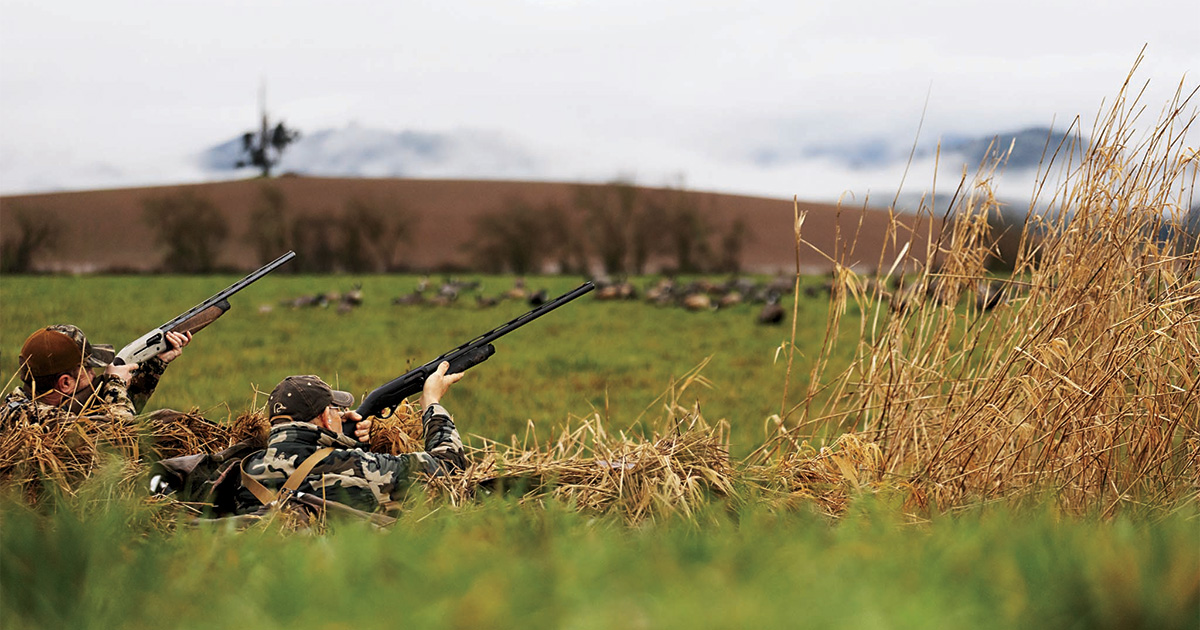
The author (left) and DU Regional Biologist Kelly Warren hunted over 21 dozen full-body decoys representing the various Canada goose and cackling goose subspecies that winter in Oregon’s Willamette Valley. Hunters in this part of the Pacific Northwest must learn to identify different goose varieties on the wing to avoid shooting dusky Canada geese, which are protected.
Set in a tight ball, the decoys mimic geese crowding into a field to feed. Local farmers hate the sight of hundreds of duck-sized cacklers packed shoulder to shoulder in their rye crops during the late-winter growing season. A hunting season that extended into March helped protect those crops by allowing hunters to target these geese—except for dusky Canada geese, a species of concern that is protected by a closed season.
I know all this because I did my homework. To buy a license for the Northwest Permit Zone of Oregon and Washington, I had to pass a detailed, 40-question test. In theory, I can now identify geese well enough that I won’t accidentally shoot a dusky. In practice, I am hunting with the biologist who wrote the study guide, and Warren has promised to keep me dusky-free.
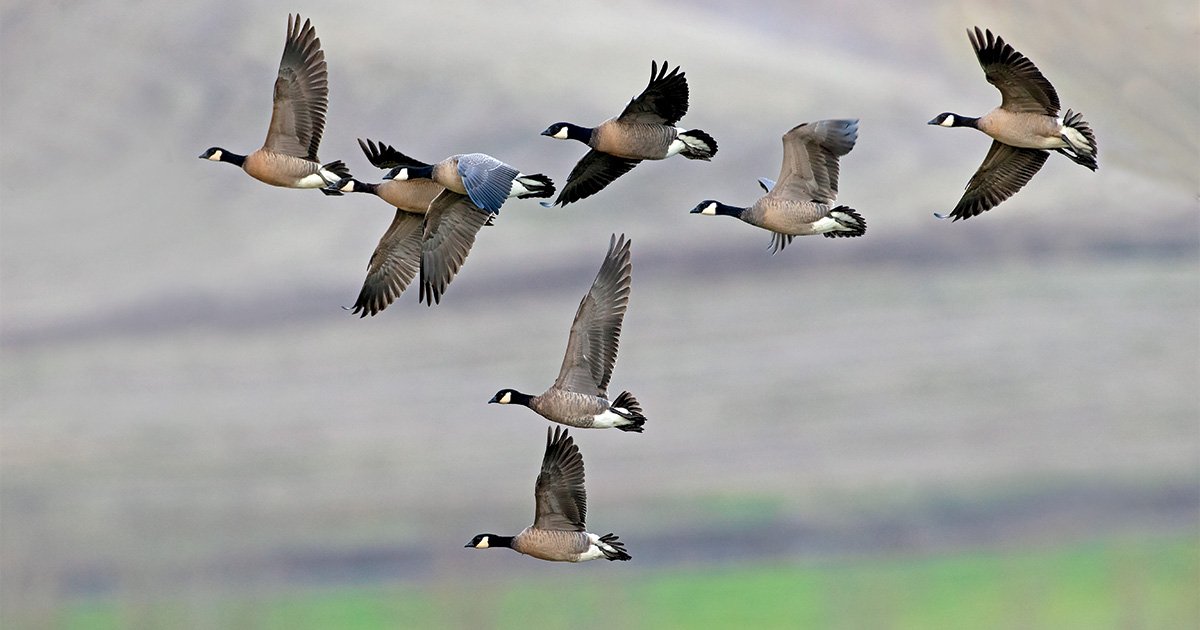
The previous day, Warren had kept me dusky-free while showing me a good cackler shoot. It started slowly, giving photographer and former goose guide Mike Callian time to take pictures of Warren and his young Lab, Sky. Photos done, we settled in to wait. Callian and Warren identified far-off flocks on the wing. The cacklers, barely larger than mallards, traveled in big, tight groups. Even I could recognize the westerns, by far the largest geese in the valley. We saw duskies too. They were too far off to identify by their darker coloration, but they were clearly larger than cacklers, and they flew in distinctive loose bunches of 10 to 12.
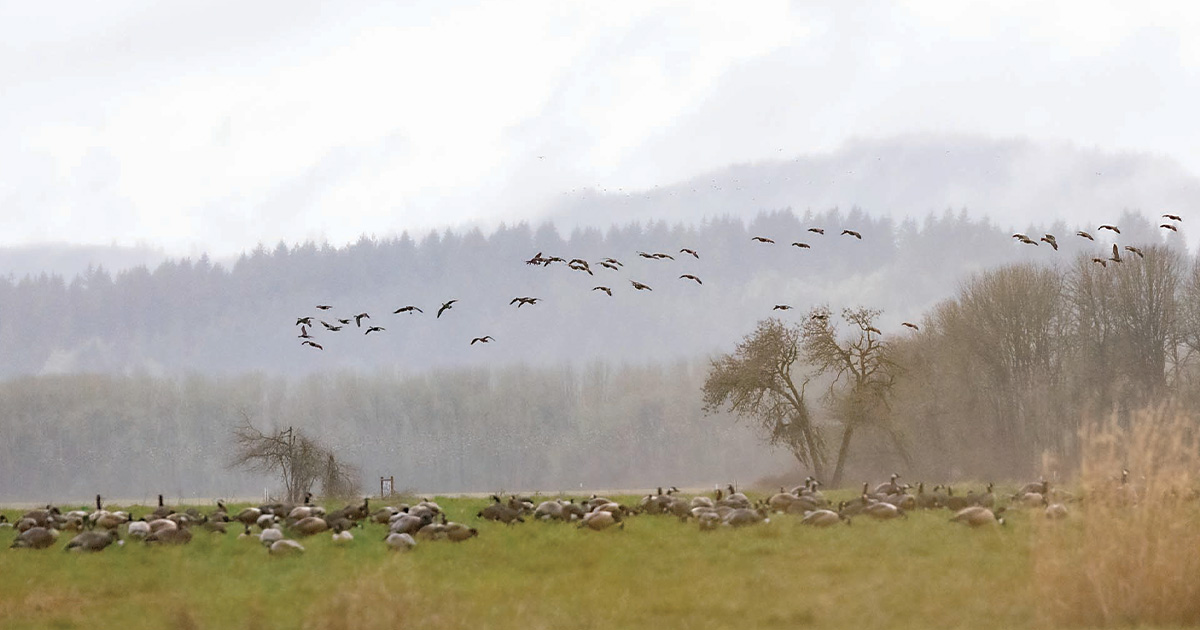
About nine o’clock, a pair of cacklers flew right at us and then locked up and dropped in. Warren called the shot. Even at 20 yards they looked tiny. I sat up and shot the goose on my side. Warren’s gun was strangely silent as the other goose flew away. “Did you shoot?” I asked. He had forgotten to reload after taking the shells out of his shotgun during the photo shoot.
We watched geese fly all afternoon. Warren and Callian were both fluent in several goose dialects, but nothing wanted to work. “Don’t worry, those aren’t our geese,” Callian said after calling to one passing flock that went on without missing a wingbeat. “That’s what I used to tell clients when birds wouldn’t respond.” We spotted a flock of duskies with a Taverner’s mixed in, although by “we” I mean Callian and Warren. I just saw a little goose flying with bigger geese. Callian tried to call the Taverner’s out of the bunch, but it stayed with them. I didn’t worry. It wasn’t our goose.
At around five o’clock they all turned into our geese. The thousands of cacklers sitting on the refuge got up, flew a short distance, landed, and then lifted off again, shifting back and forth before breaking apart. Cacklers came toward us on a beeline in bunches of 20 or 30, not fully committing but dipping low over the decoys. Warren made a nice double on the first bunch, and I added one more. He finished his limit on the next group. I whiffed but got a do-over a few minutes later, picking the leader out of the next flock, and we were done. We sat in the blinds and watched geese fly until sunset.
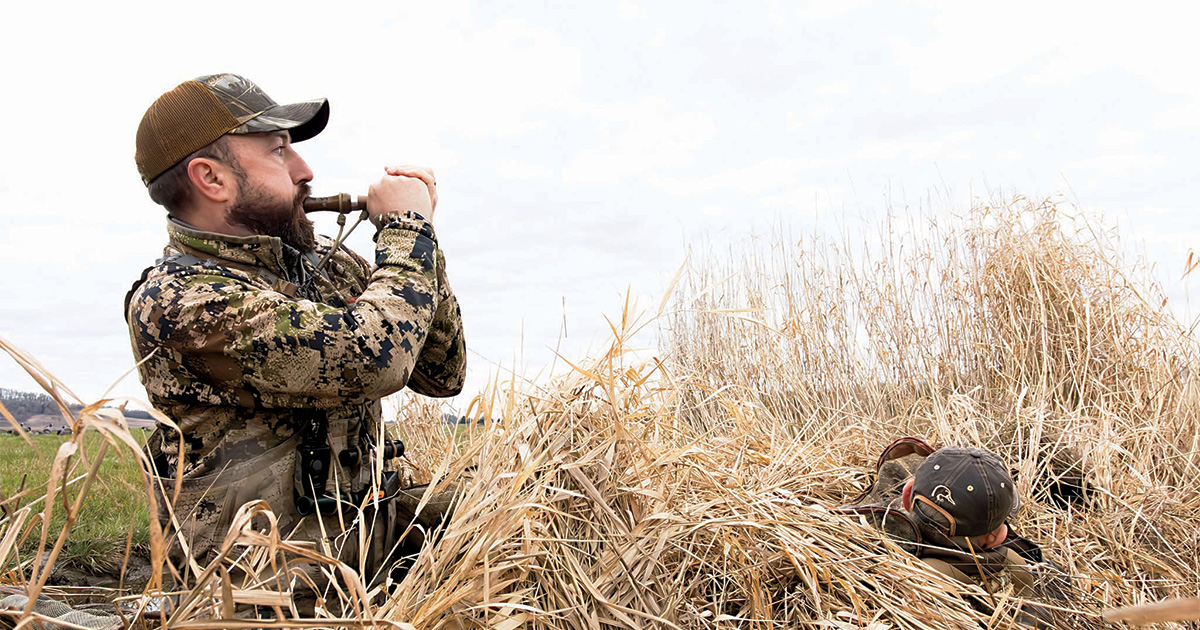
Warren calls to passing flocks of geese. Hunters here are well-advised to become multilingual callers, mastering both the high-pitched calls of cackling geese and the guttural honks of Canada geese.
That night it poured until just before daybreak. The rain held off in the morning. So did the geese. With nothing to keep us in the blinds and another storm cell headed our way, we took a drive through the valley’s fertile agricultural lands. Warren told me that Christmas trees and the valley’s famous wine grapes grow in the foothills, while the valley floor bills itself as the “Grass Seed Capital of the World.” Warren has seen the valley change from what had been a mix of row crops and rye 25 years ago to primarily rye and hazelnuts. Today, many migrating cacklers stop in the valley to feed on tender green rye shoots instead of continuing on to their traditional northern California wintering grounds.
We saw huge groups of cacklers in the fields, disregarding the eagle decoys that landowners set out to deter them, as well as bare patches where the geese had been feeding. Near the side of a road we found a bunch of duskies. We counted 10 collars among the 100 or so geese. While some of the duskies were quite dark, there was a lot of color variation among them. Experienced hunters learn to recognize duskies by their larger size compared to cacklers, as well as their broader wings, longer bills, distinctive flight characteristics, and lower-pitched calls. Although I didn’t see it while I was there, a good rule of thumb is that if geese decoy too easily, they’re probably duskies. While I practiced my goose ID skills, Warren read collar numbers with a spotting scope to see which of these birds he had personally collared on the dusky’s main breeding grounds of Alaska’s Copper River Basin.
Up until the 1970s, only about 25,000 geese wintered in the Willamette Valley, almost all of them dusky Canadas. The 1964 Alaska earthquake, a 9.2-level event and the most powerful earthquake ever recorded in North America, raised the Copper River Delta near Cordova, Alaska, four to six feet. What had been low-lying, open flats where duskies could nest safely grew into brush that favored predators, from gulls to brown bears. That predation, combined with high harvest on the birds’ wintering grounds, started duskies on a long decline.
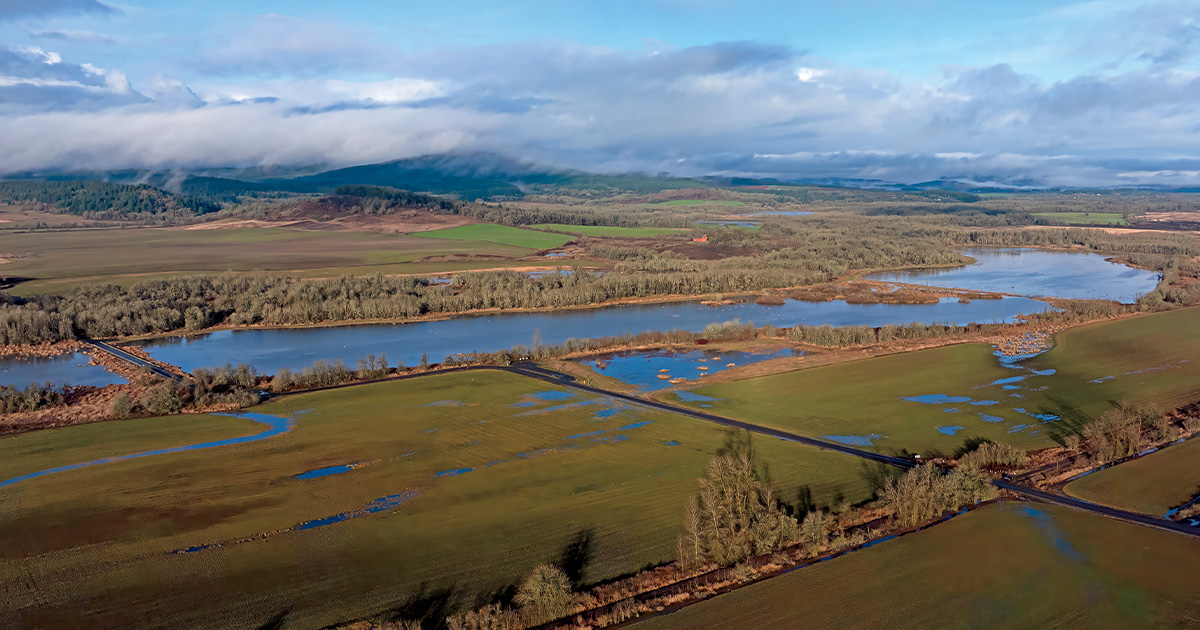
The Willamette Valley’s fertile agricultural lands, combined with several national wildlife refuges and other natural areas, attract thousands of wintering Pacific Flyway geese.
The last leg of our drive took us through one of three national wildlife refuges in the valley. The refuge is a mix of pre-agricultural habitats: forest; oak savanna, which is home to a number of elk; and both permanent and seasonal wetlands, which host wintering ducks and duskies. A large bunch of cacklers stretched across an open field, stirring only when eagles flew over.
Cackler populations are dynamic. Their numbers dropped from an estimated 400,000 birds in the 1960s to fewer than 25,000 in the mid-1980s. Aided by harvest restrictions and conservation work, they rebounded, and many made the move from wintering in California to the Pacific Northwest. Now numbers are falling again. Just a few years ago the refuge held 40,000 cacklers; today only about 10,000 winter there. Warren said there is some evidence that avian influenza might be playing a role. As cackler numbers decline again, the third season split that runs into March is closed for the 2025–26 season, and the limit in the first and second splits has been reduced to two.
We returned to the spread we had hunted that morning and sat in wet blinds until we thought better of it and moved. I counted us lucky that Warren’s grandfather had the foresight to buy a place to hunt back in the 1970s, and that Warren can still set a permanent spread there today. He recalled how he started coming to the blind at the age of three with his grandfather, who was a fisheries professor. “He would shoot a duck, and we’d get out a field guide,” Warren said. “The hunt didn’t start again until I identified the bird.” To carry on that family tradition, he started bringing his daughter Shaylee here when she was three.
Even with the luxury of a large spread of full-body decoys in a good spot, Warren said, cackler hunting has become more difficult. “This used to be easy. We’d be done by 9:30 and I used to use silhouettes. Now, hunting cacklers is like hunting snow geese. I’ve had better success with full-bodies, and noticeably more success when I went from 13 dozen to 21 dozen.”
Other than occasional short hops, the cacklers weren’t doing much after the rain stopped. The afternoon passed slowly, and then I heard the low honks of a single over my shoulder. Warren’s duck hole was behind us, and he’d set half a dozen Canada floaters on the near side for visibility. Cacklers, he told me earlier, rarely decoy to floaters. Honkers do, though, and this approaching western Canada wanted in with the decoys on the water. Sneaking a glance over my shoulder, I saw that the goose was low, and when it set its wings and dropped, I lurched to my knees, twisted, and shot just before it dropped out of sight below a berm. To my surprise, Callian, who had a higher vantage point, said “nice shot!” and I stood up to see the goose lying among the floaters.
An hour or more later, a single cackler passed low over the decoys. Warren, a good host, told me to shoot. I told him that it was his turn. He dropped it, and Sky came weaving back through the tightly packed decoys with the bird in her mouth. I set Warren’s cackler next to the western, and the bigger bird dwarfed the three-pound cackler.
With five minutes of shooting light left, we were standing outside our blinds, chatting under gooseless skies. Checking my watch, I said, “I’ve shot a lot of geese in the last five minutes of legal light.” On cue we heard the high-pitched sound of cacklers behind us and we dove for the blinds. Warren worked them, one eye on the geese, the other on the time. Shooting hours ended at 5:55. As the birds swung, Warren muttered, “I wish we had two more minutes.” He waited as long as he could, and when his watch hit 5:54, he called the shot. The flock was still higher than we’d have liked, but it was in ethical range. We fired and one goose veered out of the flock, made a short glide, and crashed dead where it made an easy retrieve for Sky.
The final day of our hunt was almost a replay of the second. Early in the afternoon a single western cupped up for a landing in the decoys. My shot hit it around the edges. Warren backed me up. My excuse was that after shooting little geese, I was disoriented by the size of this bird.
Late in the day, a high wind started to blow as the storm front moved out. We hoped the blustery conditions would get geese moving, and they would have if the temperature had been 20 or 30 degrees colder. Only one group wanted to decoy. Warren worked the birds patiently through four swings. On the first swing, his biologist’s eye picked out the biggest male in the group as a potential bird for mounting and kept track of it. The flock came from behind us on final approach, banking around, and one bird dropped in, feet down, ahead of the rest. Warren called the shot and picked off his mounter. I shot the lead goose as it backpedaled a few feet off the ground, just the way I like them. This time, it was Warren’s turn to ask if I had shot. “I didn’t see anything fall,” he said. “That’s because it only fell this far,” I answered, holding one hand a foot above the other. It was the perfect ending.
My only regret was that no duskies came close enough for me to not shoot at them, denying me the full Willamette Valley experience. Even so, this cackler hunt turned out to be well worth studying for.
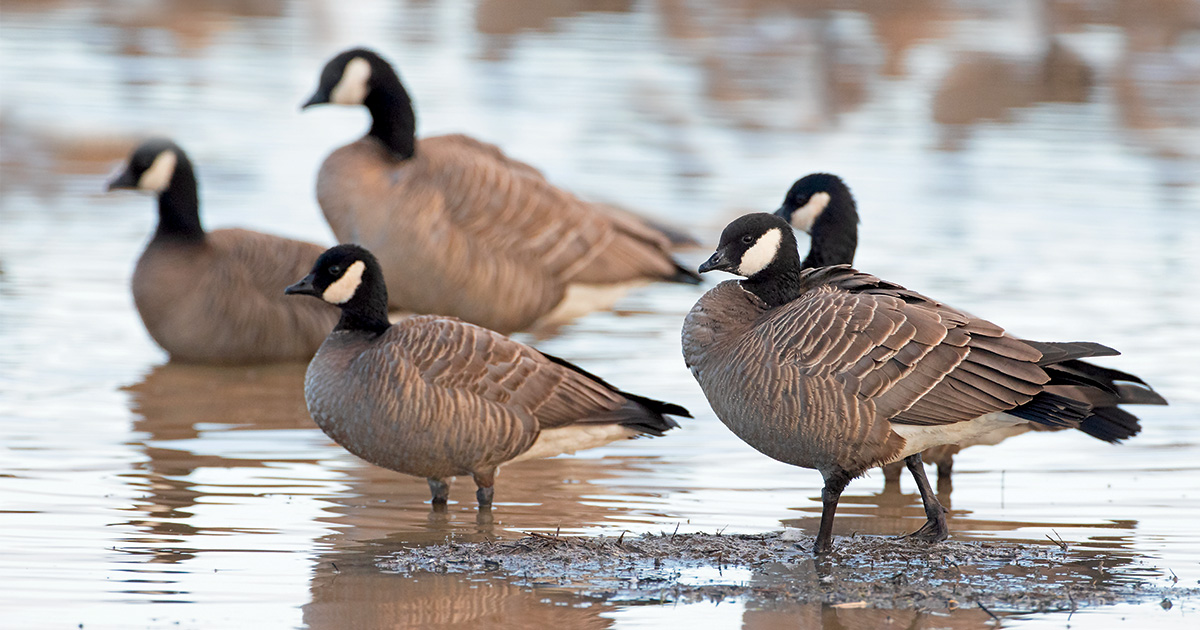
Cackling geese (Branta hutchinsii) and Canada geese (Branta canadensis) are members of a large family of white-cheeked geese found across North America. Though they look similar, cackling geese are much smaller than Canada geese and produce high-pitched calls, which are much different from the guttural honks of Canadas. Cackling geese were once classified as subspecies of Canada geese, but in 2004 the American Ornithologists’ Union reclassified them as a new, separate species.
There are four subspecies of cackling geese in North America: cackling (Branta hutchinsii minima), Aleutian (Branta hutchinsii leucopareia), Richardson’s (Branta hutchinsii hutchinsii), and Taverner’s (Branta hutchinsii taverneri). All four subspecies largely breed on the treeless tundra of Alaska and northern Canada. With the exception of the Richardson’s subspecies, cacklers are found almost exclusively in the Pacific Flyway.
The other geese mentioned in this article are among the seven subspecies of Canada geese found in North America, including lesser (Branta canadensis parvipes), western (Branta canadensis moffitti), Vancouver (Branta canadensis fulva), and dusky (Branta canadensis occidentalis).
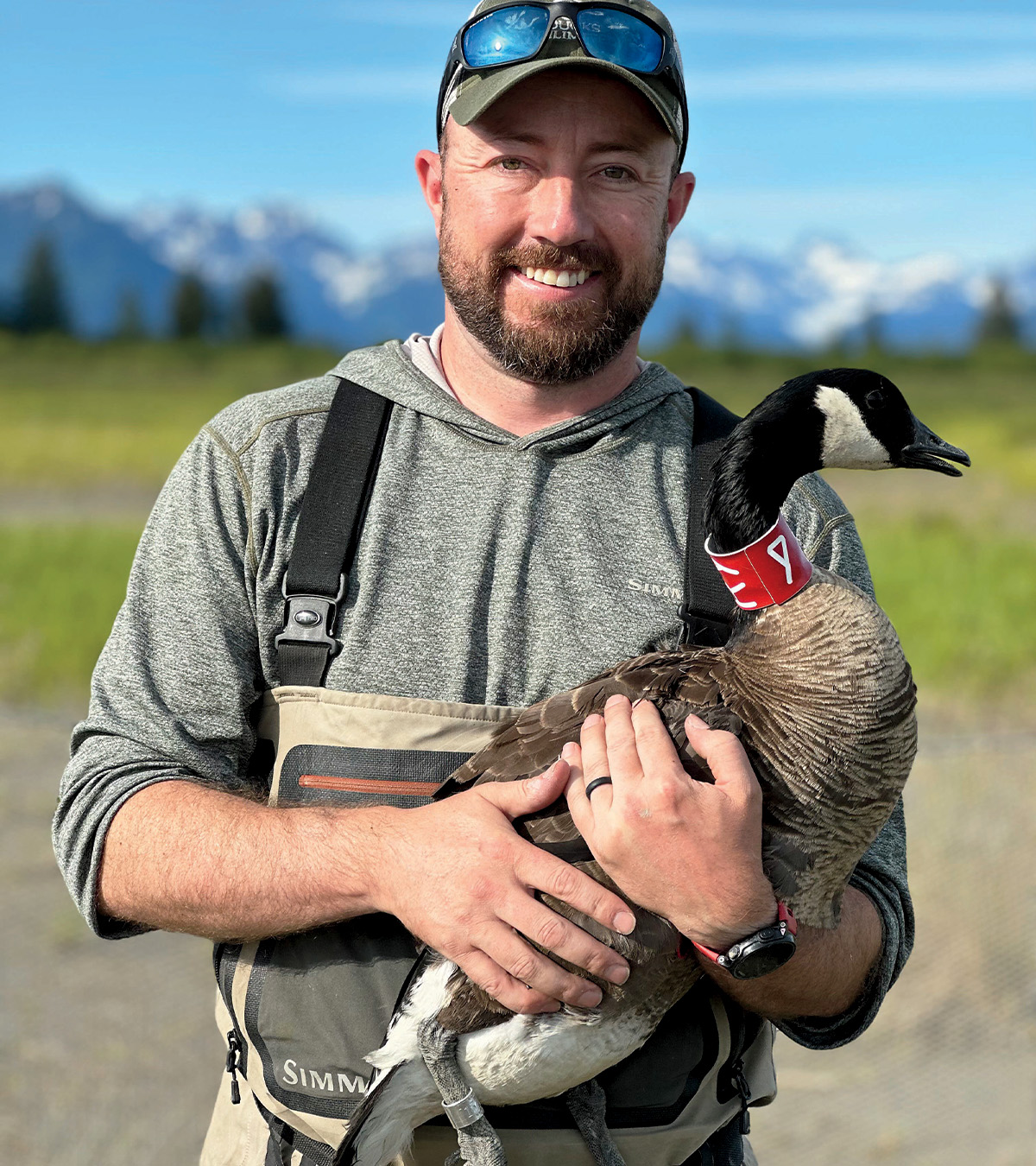
With dynamic goose populations, weather, and habitat conditions, research is a crucial component in understanding this region’s geese. Duskies are of special concern because their numbers are declining. DU supports both banding studies and habitat work. In partnership with the Chugach National Forest and state and federal agencies, DU has helped build over 500 artificial nesting islands on Alaska’s Copper River Delta, where many duskies nest and raise their broods. DU also helped transplant duskies to nearby Middleton Island in the Gulf of Alaska, where there are no mammalian predators and duskies have shown improved nesting success.
Another study tracks the movements of lesser Canadas and nearly identical Taverner’s cackling geese through GPS-GSM collars and DNA samples. The Alaska Department of Fish and Game, in collaboration with Ducks Unlimited, the Washington and Oregon Departments of Fish and Wildlife, and the US Fish and Wildlife Service, uses bait, decoys, and rocket nets to capture and band lessers and Taverner’s on their wintering grounds.
DU is also active in habitat work in the Willamette Valley, where so much of the land has been converted to agriculture. DU’s Wings and Wetlands Initiative works to protect and enhance wetlands throughout Washington, Idaho, and Oregon, including the Willamette Valley.

Share this photo


Ducks Unlimited uses cookies to enhance your browsing experience, optimize site functionality, analyze traffic, and deliver personalized advertising through third parties. By continuing to use this site, you agree to our use of cookies. View Privacy Policy