Migration Alert: Wary Birds Test Hunters in Oklahoma, Light Geese Stretch North
Jan. 21, 2026 – Central Flyway – Oklahoma
Jan. 21, 2026 – Central Flyway – Oklahoma



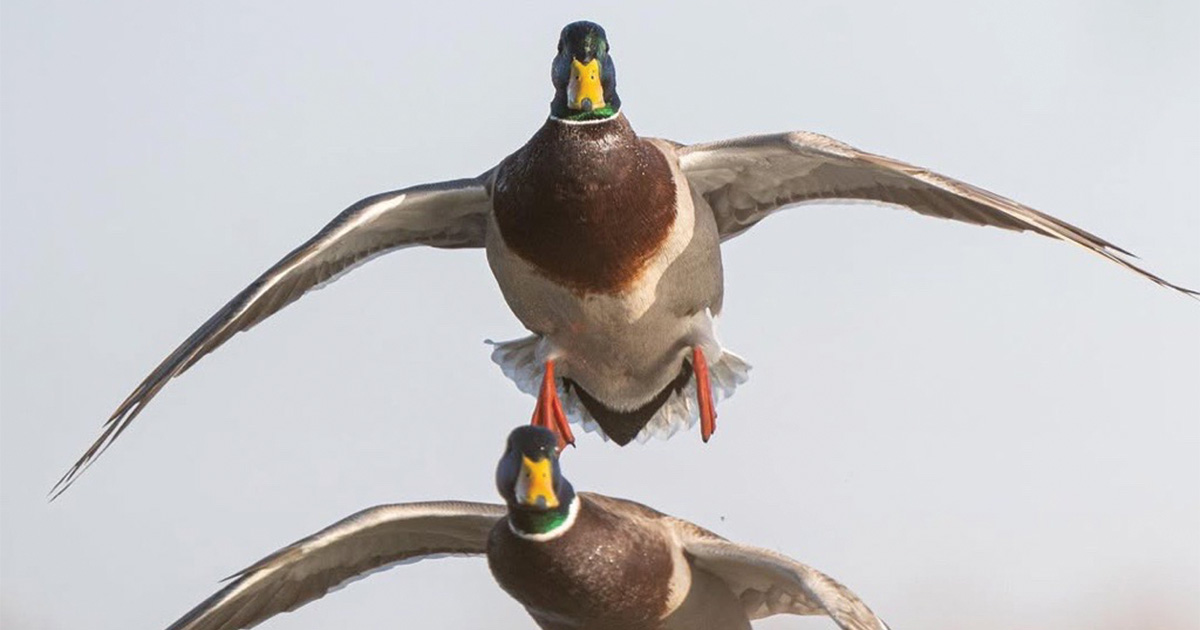
The challenge for hunters in parts of Oklahoma isn’t a lack of ducks and geese, it’s finding ways to fool birds that have been around long enough to have the game figured out.
Mallards, snow geese, white-fronted geese and Canada geese all migrated into Oklahoma with the arrival of winter weather in the northern sections of the Central Flyway at the end of November, explains Paxton Smith, Migratory Game Bird Biologist for the Oklahoma Department of Wildlife Conservation. The influx of birds from the north helped deliver a great start to the waterfowl season, but the flow of new birds into the state has slowed and so has the hunting.
“It’s become pretty tough out there, but that’s not much of a surprise when you consider that the birds we’re hunting today are the same birds that we were hunting during the first split,” says Smith. “It seems that hunters are turning their attention to geese, which seem to be providing more of the opportunities.”
Smith says that hunters are finding some success when they change tactics.
“One of the biggest changes I’m seeing is just a drastic change in the number of decoys that hunters are using,” says Smith. “Instead of these big spreads, hunters are putting out really small spreads, sometimes as few as 2 to 6 decoys, and that seems to be working. The birds have pretty well figured out what a regular decoy spread looks like, so you have to mix things up to give them a new look.”
A mix-up in the weather would go a long way to helping hunters finish the season on a strong note, Smith adds.
“Just about any change would be good. Any cold or snow or ice up north would help us,” he says.
Along those lines, I recently returned from a late-season duck hunting trip to east-central Arkansas, and on the drive from the Mississippi Delta to my home in southeastern South Dakota, I encountered no snow along the entire route; large areas of open water in Missouri, Iowa and Nebraska; and flocks of light geese as far north as the Missouri/Iowa state line. With February and March being some of the snowier months for states in the northern Central Flyway, there is still plenty of time for Mother Nature to put the brakes on the light goose migration. In fact, the cold front forecasted to descend throughout the Central Flyway this week is one to watch, as temperatures are set to plummet and snow is forecasted to fall on several states, including some deep within the flyway.
Should the coming weeks fail to produce any significant snowfall in Nebraska and South Dakota, however, there will be little to slow the light goose migration when warm temperatures and southerly winds make their inevitable return.
Stay up to date with the latest migration information.

Share this photo


Ducks Unlimited uses cookies to enhance your browsing experience, optimize site functionality, analyze traffic, and deliver personalized advertising through third parties. By continuing to use this site, you agree to our use of cookies. View Privacy Policy