Hot Spots for Late-Season Ducks
When birds vanish from traditional areas, you can often find great hunting in these out-of-the-way places
When birds vanish from traditional areas, you can often find great hunting in these out-of-the-way places




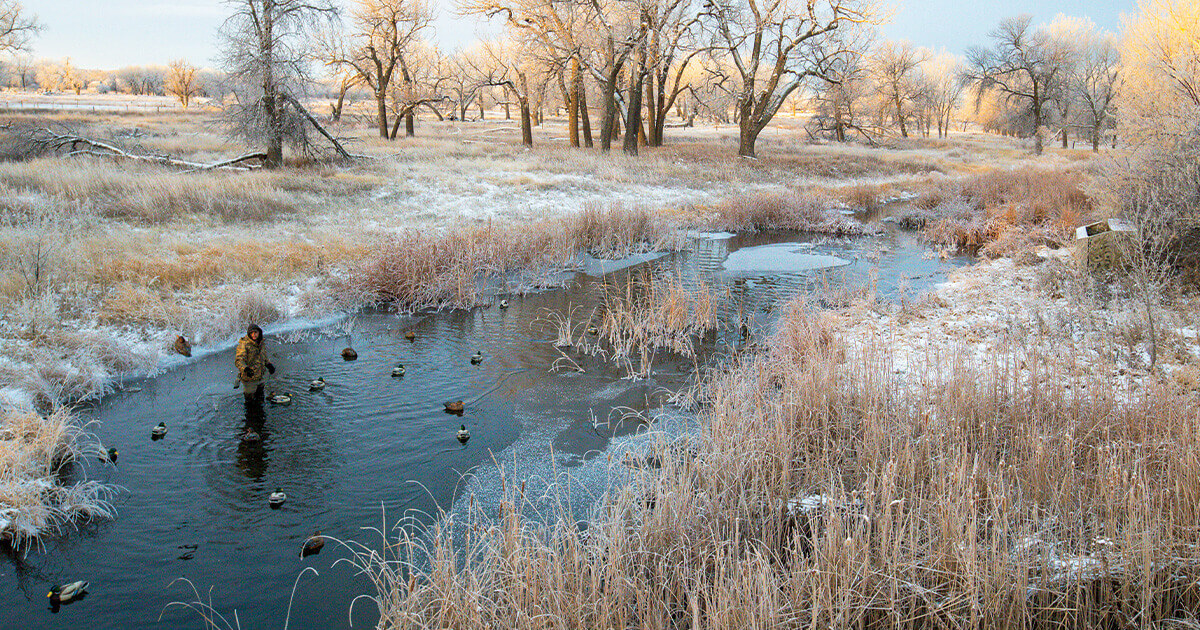
We could walk to the slough, which we did many times, but it was quite a hike, and only once did I step in a beaver hole and wrench my knee so badly that I had to undergo ACL surgery. Or we could paddle to the slough, an endeavor that took a solid half-hour and involved negotiating the boat wakes of other hunters running the dark river, most of whom were unconcerned about two knuckleheads in a 16-foot canoe. Or we could run my johnboat to the slough, but then we’d have to haul the heavy boat and motor up over the river bluff, stash it out of sight, and camouflage the drag marks in the mud like we were building a tiger pit.
Several times, we swore we’d never do it again, but there we were. It was a little piece of water 50 yards off the main channel, bypassed by plenty of hunters barreling down the river. Once the shooting started on the big water, green-winged teal, wood ducks, and mallards would sneak into the slough in twos and threes, and we’d be there waiting.
The one thing we couldn’t do: arrive at the slough without being drenched in sweat and half worn out with an hour till shooting light to go. That’s often the case when you’re hunting hidden places. They might be small out-of-the-way waters where ducks like to slip in and hide when hunting pressure pushes them away from better-known spots. Or they might be overlooked and oddball locations such as irrigation ditches and stock tanks. These pocket-water refuges can provide some of the best hunting you’ll ever have, especially late in the season. And even when the shooting is slow, it’s often up-close, personal, and unforgettable. Here are some of the late-season hot spots that have produced for me over the years.
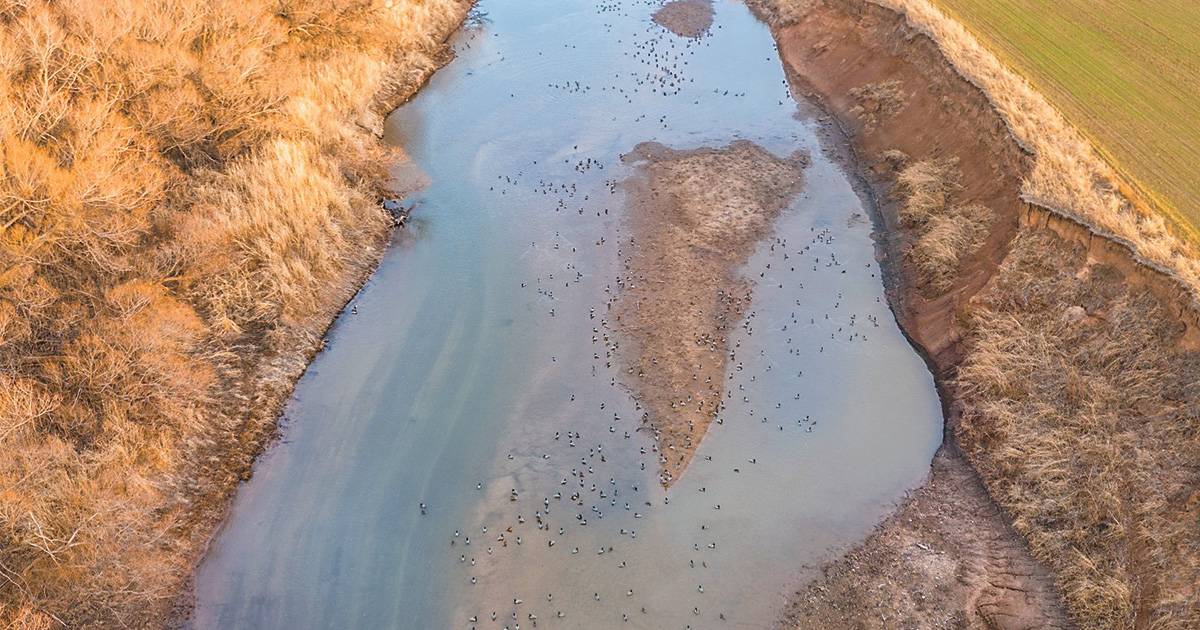
Ducks often react to late-season hunting pressure by retreating to quiet, secluded waters.
I cut my duck-hunting teeth on the creeks and streams that feed large reservoirs. Many of these lakes are ringed with public lands, and that access often extends far up the tributaries, especially if the reservoir is managed by the Army Corps of Engineers. Beavers love these waterways and will impound small ponds and tiny side swamps that can be a mile or more from open water. It might take 30 minutes to bash your way into a remote reservoir creek swamp, but a duck can cover that distance in a single minute. Don’t be shy about moving far up a creek.
To find a ducky spot on a reservoir tributary, pore over satellite maps such as those on Google Earth or onX. Use the line-measuring tools to figure out which wide spots in a creek are large enough to warrant exploration, then scout those waters to verify what you see on a satellite image. Getting a firsthand look is critical. Flooded areas along reservoir tributaries can change quickly as beaver activity moves up and down the creeks. High-water events can plug new areas with debris jams or empty out the open water you see on a three-year-old satellite photo.

Conditions on creeks and streams that feed into reservoirs can change quickly. Use online tools and boots-on-the-ground scouting to find spots that ducks are using.
Be sneaky. Mark trails with reflective thumbtacks. I use brown tacks instead of the more visible orange ones. Especially on public lands, I don’t want to invite competition by marking a trail that anyone can follow.
And stick around. Once other hunters on the big water start pulling in the decoys and heading home, flushed ducks will often flee by coursing up these swamp-riddled tributaries, looking for sanctuary. It’s often well worth the effort to stay in position until noon.
Gear for these waters is minimal, but there’s one piece of equipment you can’t do without: a loud alarm clock. Good duck spots on reservoir tributaries are typically small, so multiple parties can cut everyone’s chances of success. You need to be there first, which likely means an early rise.
Pocket-Water Playbook: Spinning-wing decoys can be very effective, but they can also spook wary birds. Instead of staking out your spinners in open water, tuck them into cover so the flash of the wings is more muted and subtle.
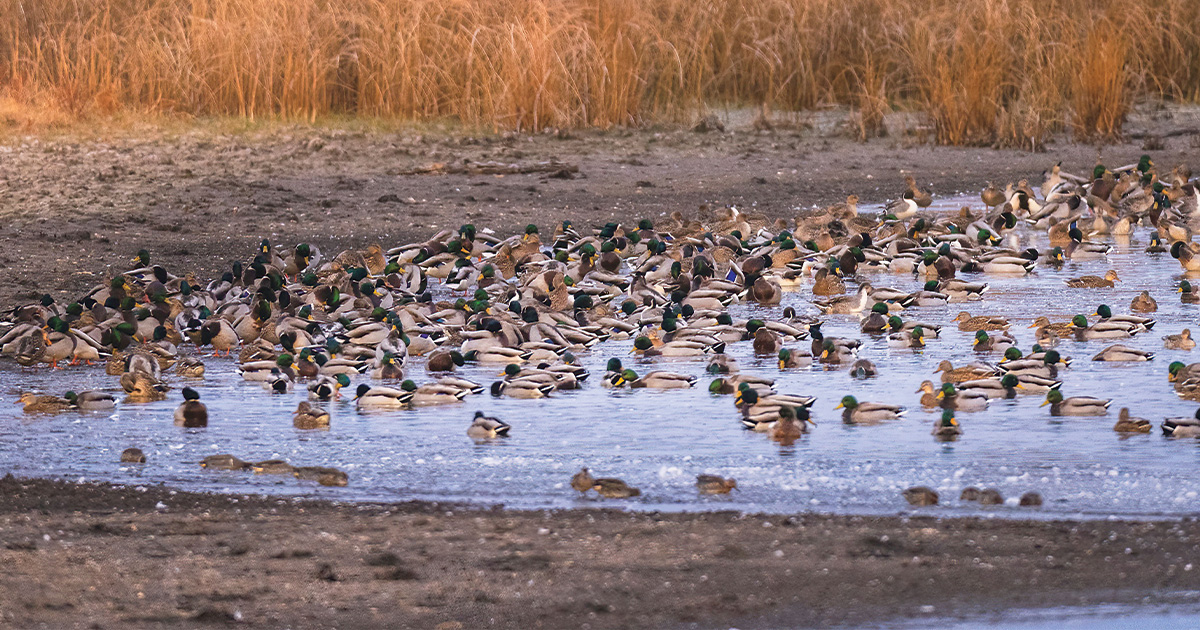
In many arid landscapes, stock ponds are waterfowl magnets. Set up a spread on a good-looking pond or find several to jump-shoot.
Teal are the most dishonest of ducks. They don’t circle your decoys in great looping gyres, like ducks are supposed to do, giving you a chance to steel your spirit and ready the gun. They don’t drift into the decoys with wings set and feet splayed. Instead, they swarm over the horizon like giant clouds of bees and strafe the decoys from any direction they please. They come in low, half-hidden against the reeds, in twos and threes. Or they bomb the blind in tight formation, so you empty your gun and come up duckless. When it comes to being ducky, teal are the worst.
Which is why, hunkered down on the edge of a stock pond in east Texas, the sight of another teal swarm on the horizon had my heart hammering. If there’s any place to hunt teal that evens out the competition, it’s a small pond of cattle water in a vast landscape. If they’re coming in, they’re coming in hot and close.
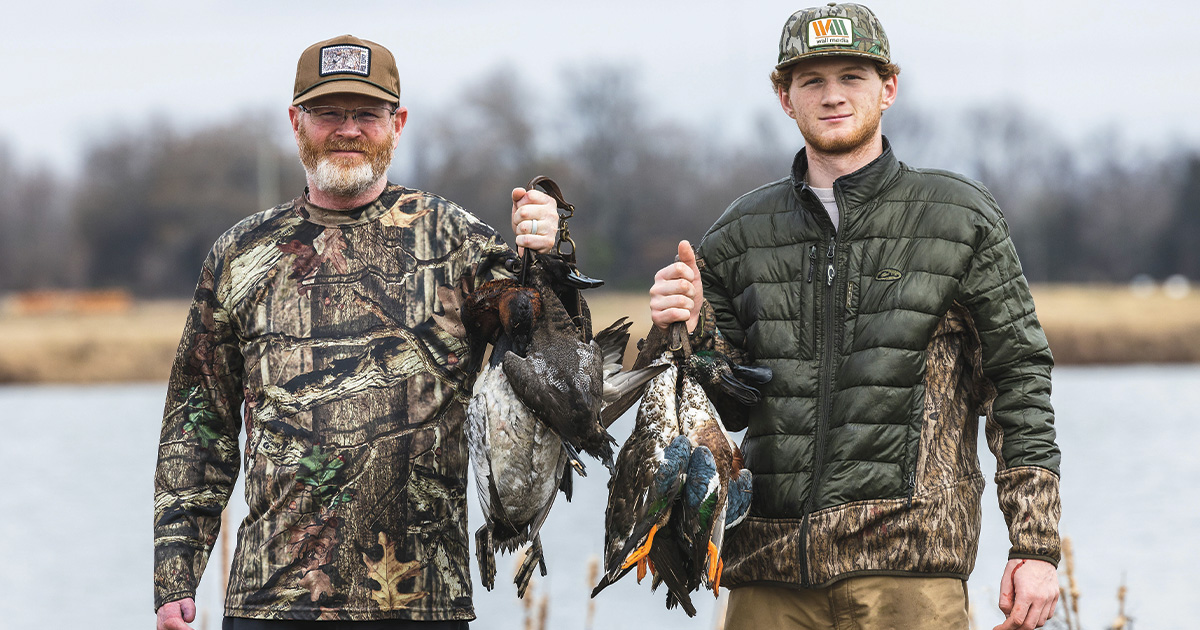
Stock ponds, or “tanks” as they are known in Texas, are smallish impoundments that provide water for livestock in arid country. In some places, they offer the only water for miles. In the Lone Star State, about 600,000 stock ponds dot the landscape. They look like prairie potholes, and they attract ducks like prairie potholes do.
Pond jumping is a classic High Plains tactic. It’s as straightforward as a duck hunt can get. Use a map or satellite image to identify a route that takes you by eight or 10 stock ponds. Most folks set up on a larger pond for the morning flight, then jump-shoot the rest. You’ll need landowner permission on private ranches, but on Bureau of Land Management lands and other public properties, it’s possible to put together a full day of jump-shooting on stock ponds alone.
Pocket-Water Playbook: Reload and reset. Ducks that have been jumped off a small stock pond will often circle overhead a time or two before winging off to distant water. If you jump-shoot a pond, wait a few minutes after flushing birds in case a small bunch or a single circles overhead in range.
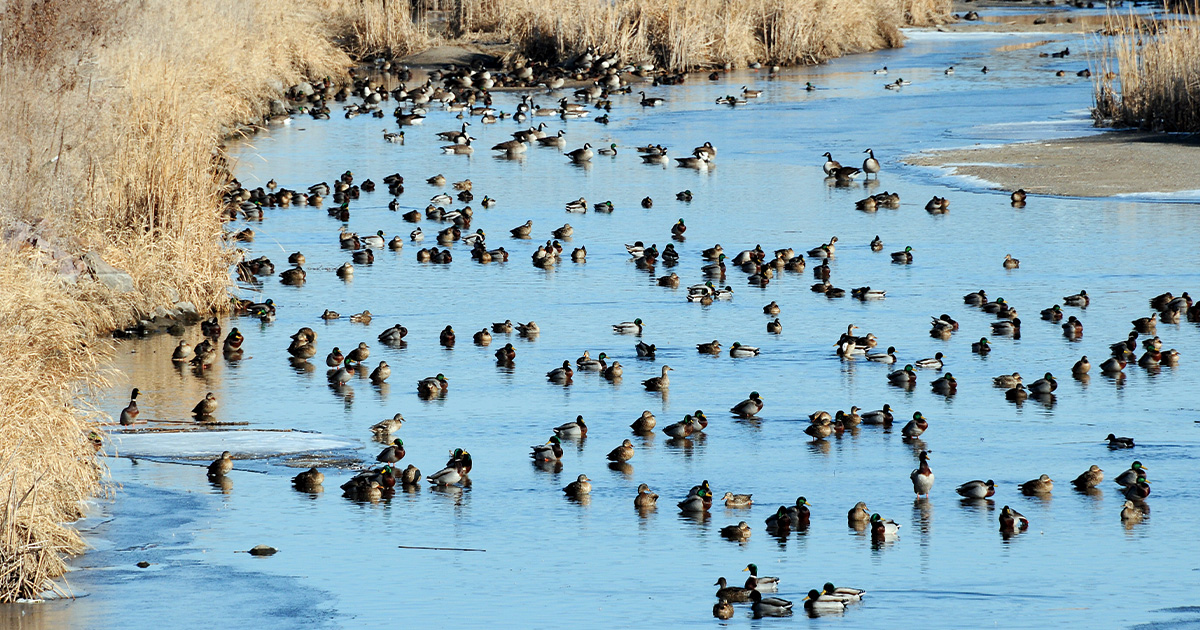
In coastal marshes, ducks often feed and loaf in areas that have recently been flooded by rising tides.
We rode and we rode and we rode, breaking ice in the black dark with the big johnboat, and then we rode some more. There was a marsh pond deep in Virginia’s Back Bay where a running tide tended to keep the water open and ducks tended to loaf in the mornings. We needed to be there first and early, so we could stay long and late. And the payoff was worth the price: gadwalls, wigeon, and green-winged teal galore. There were plenty of black ducks too, but it was their lucky day—the open season for them was still a week away.
We came out on top that morning, but salt marsh ponds are either takers or givers. I’ve knocked it out of the park in a salt marsh, and I’ve humped gear for nearly half a mile through cordgrass and black needle rush that towered over my head, only to sit in a wet spot and watch birds trade over the Atlantic Ocean a half-mile away. But when it all comes together in a salt marsh pond, there’s something magical about the experience.
Hunting salt marsh ponds successfully requires channeling your inner angler. Wind matters, clouds matter, but nothing matters like the tide. As the tide rises and floods exposed mudflats, birds often move to interior ponds to feed. The secluded, sequestered waters in a vast marsh can be a magnet for pressured ducks and birds bucking high winds. King tides and even wind-driven tides can flood areas that typically remain dry, giving birds access to feeding grounds that are otherwise off the menu.

This is where a jerk cord can be a trip saver. Putting ripples on a salt pond is critical. Your little honey hole is likely only one of many that ducks can see from the air, so attracting their attention is a must. And the splashy ruckus of a jerk cord also holds the attention of ducks that are looking for any reason at all to try another spot.
It’s that level of wariness that salt marsh hunters should bear in mind. One poorly camouflaged hunter can sink an entire party’s chances. Salt marshes typically present a vast, fairly uniform sweep of color and texture. Flying fowl can see forever, and they will pick out any anomaly in the marsh cover. Camouflage that matches the color tones of the surrounding marsh is critical, especially for jackets and hats.
Pocket-Water Playbook: By definition, salt marsh ponds are surrounded by salt marsh, which makes scouting these waters tricky. One solution: Toss a stepladder into your truck and use it to gain just enough elevation so that you can glass ponds without spooking ducks.
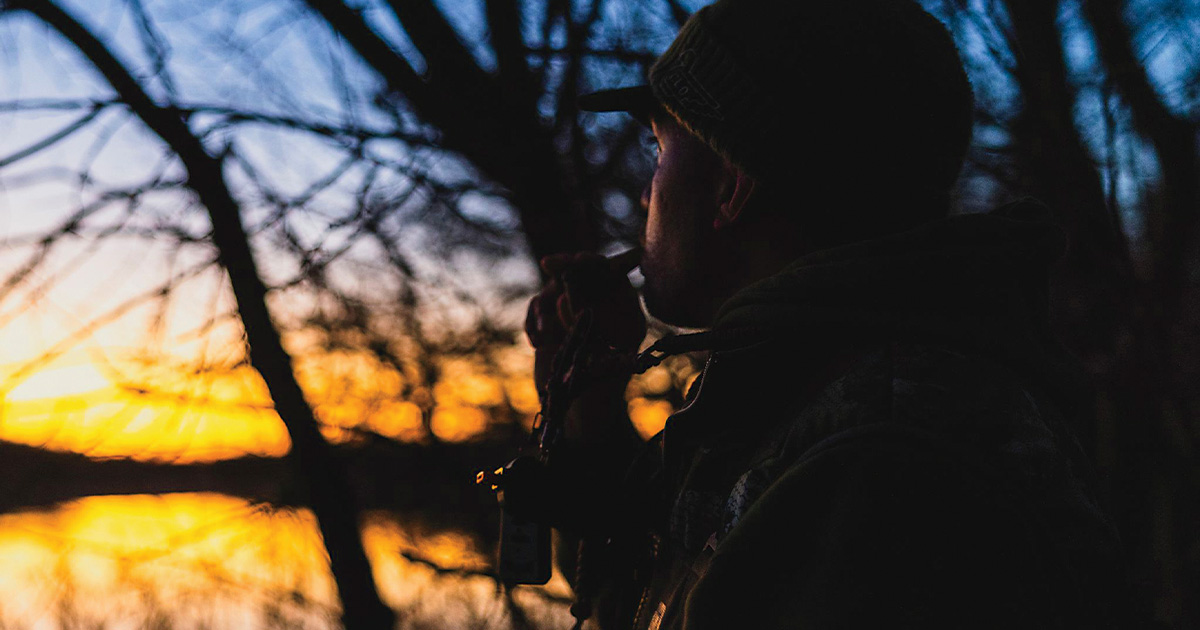
Carefully control your calling volume on sheltered backwaters to avoid spooking wary ducks looking for solitude.
I don’t know what to call these, so I made up a name: levee seeps. I’m not talking about man-made levees, but natural levees—the long, elevated ridges of sediment that pile up along the banks of a river or stream. These areas are often thickly vegetated and covered with trees, and the rise can be as slight as a few subtle feet. When the water in the adjacent waterway overflows its banks, however, these low, dry spots can become a magnet for ducks overnight. Newly flooded levee seeps are often packed with duck grub, such as acorns, seeds, soft mast, and invertebrates flushed out of their dry-ground homes. Ducks can find these new food sources quickly.
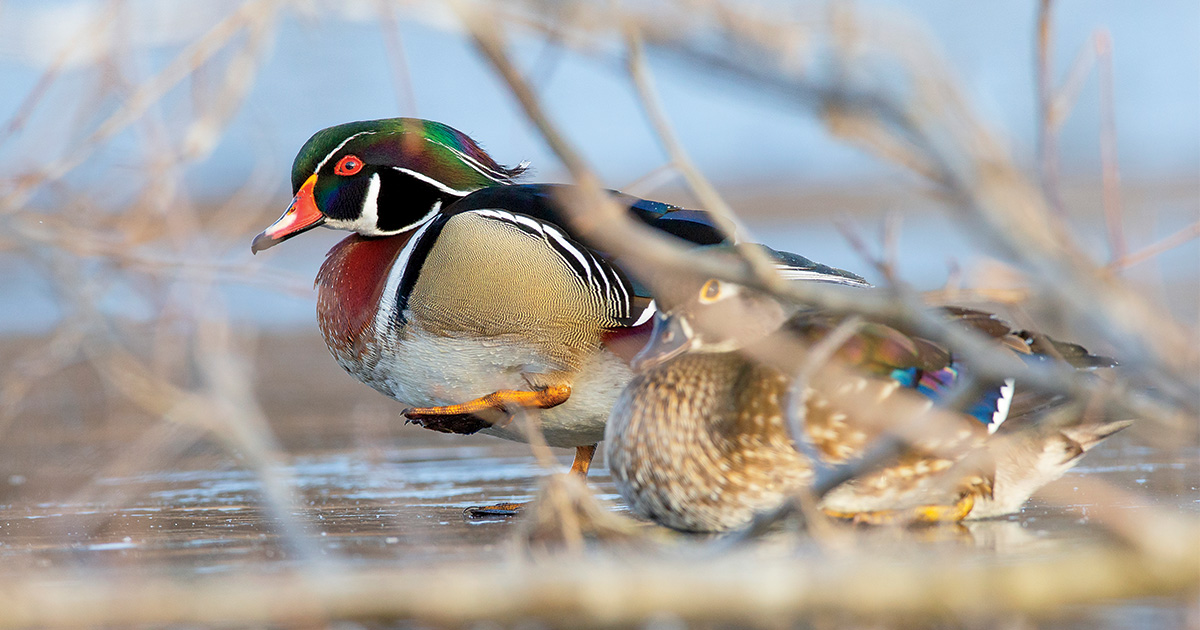
Depending on the habitat and terrain, a levee seep can resemble green timber, a flooded impoundment, or a jumble of wet cutover. No matter its character, the trick to hunting these ephemeral honey holes is to get there fast, before the water leaves. And because birds over brand new water haven’t yet patterned their flight paths or become accustomed to landing, you might consider tightening your shotgun choke or stepping up a shot size. These levee seeps can be long, narrow bodies of water, so pass-shooting curious ducks is often what you’ll get.
During high-water events, birds will have plenty of choices, but the sudden availability of a new food source is like having a new doughnut shop down the street. You’ve just got to try it, if only once.
Pocket-Water Playbook: Keep a close eye on your local creek or river to determine the level at which it overflows. Then monitor the rise during and after heavy rains. The USGS National Streamgaging Network monitors water flow on thousands of rivers and creeks. To find any stream gauge, go to waterdata.usgs.gov for a clickable map.
During the late season, try setting most of your decoys in hen-drake pairs to mimic the birds’ natural behavior.
Looking back, it made perfect sense. It was that corner of the beaver swamp where I figured the ducks wouldn’t go—it was a little too shallow, a bit too brushy, and too choked with blowdowns to allow a duck to move around with ease. In other words, it was just the kind of place where a couple of paired-up mallards would like to retreat. Away from the ruckus, away from the crowds, away from any competition that might dampen their courtship. The first mallard pair drifted down just before shooting light, but the second pair checked in well after legal hours. Sadly, I was out of range, and all I could do was twiddle my thumbs and keep watch over my ordinary spread of a dozen plastic ducks that no one cared about.
I’d missed my chance, but I learned my lesson. In the late season, many ducks—mallards in particular—are paired up, and they’re not looking for a party. Late-season paired ducks are different creatures altogether and require a different hunting mind-set. These lovebirds aren’t interested in socializing. Paired drakes don’t want to fight off the competition, and paired hens don’t want to deal with more suitors. That makes smaller waters and hidden refuges a favorite of duck couples. And a great place to lure them in.
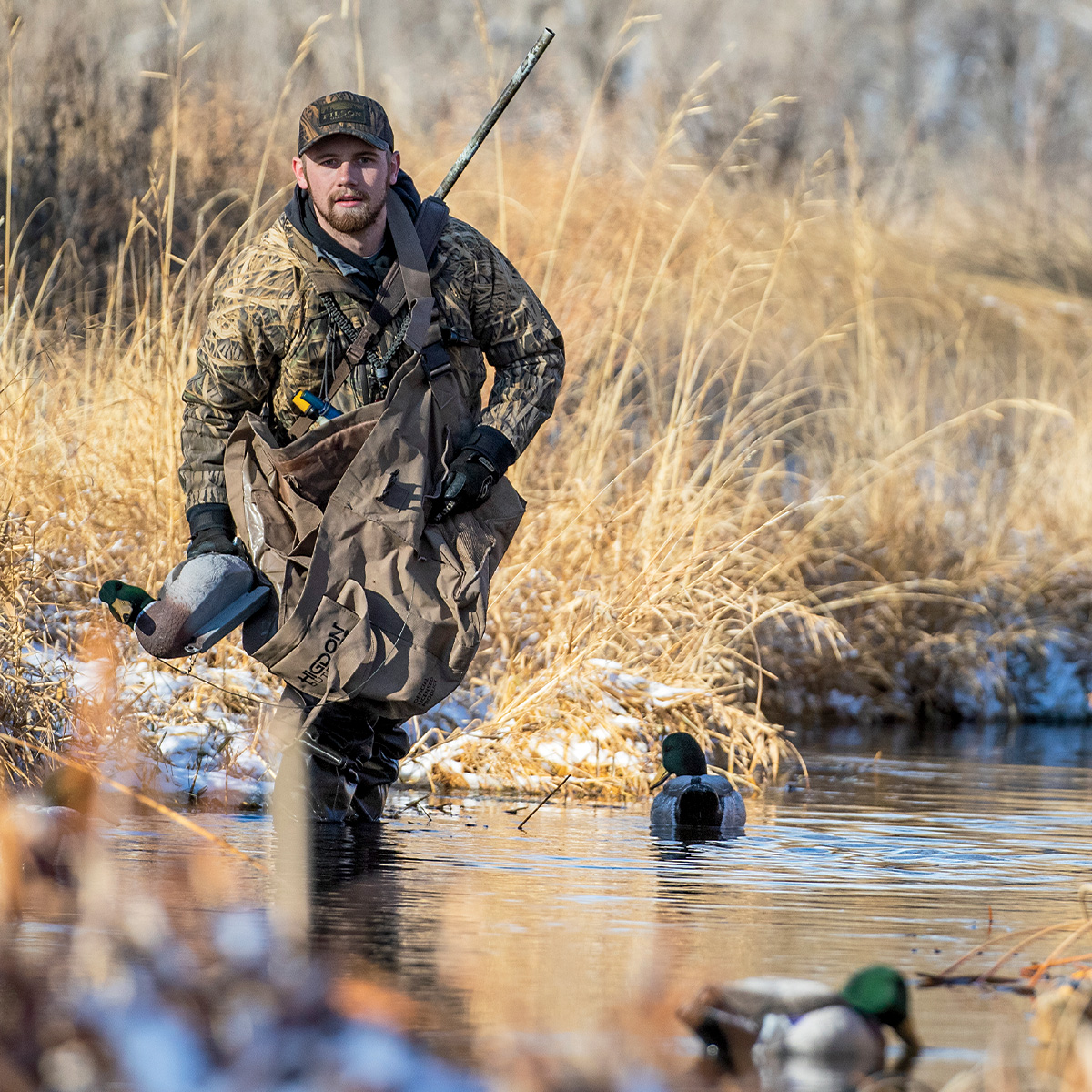
When setting up a landing spot for honeymooners, a few scattered decoys will help, but place most of your decoys in hen-drake pairs. This is the time to break out your best and your brightest—I even keep a half-dozen flock-headed mallard decoys clean and pristine for most of the season, so I can deploy them late, when birds are fully plumed and have had enough of dull brown plastic fakes. A favorite tactic is to back off a traditional beaver swamp spread of a dozen woodies and mallards, place a pair of mallards and a single hen 40 yards upwind, and set up directly between them. That way, I’m within range of small flocks winging into the open-water set but also close enough to the quiet corner that I’ll have a chance at paired ducks looking for a bit of privacy.
Pocket-Water Playbook: In these tight quarters, birds can appear out of nowhere, especially paired ducks, which typically stay pretty quiet on the wing. When I think paired ducks will be around, I’ll use battery-powered “butt feeders” that paddle their feet or squirt water to create movement. Then I can keep my attention on the sky and my finger near the shotgun safety.

Share this photo


Ducks Unlimited uses cookies to enhance your browsing experience, optimize site functionality, analyze traffic, and deliver personalized advertising through third parties. By continuing to use this site, you agree to our use of cookies. View Privacy Policy