Waterfowler's Journal: Fighting Ice
How to keep hunting when the water turns hard
How to keep hunting when the water turns hard




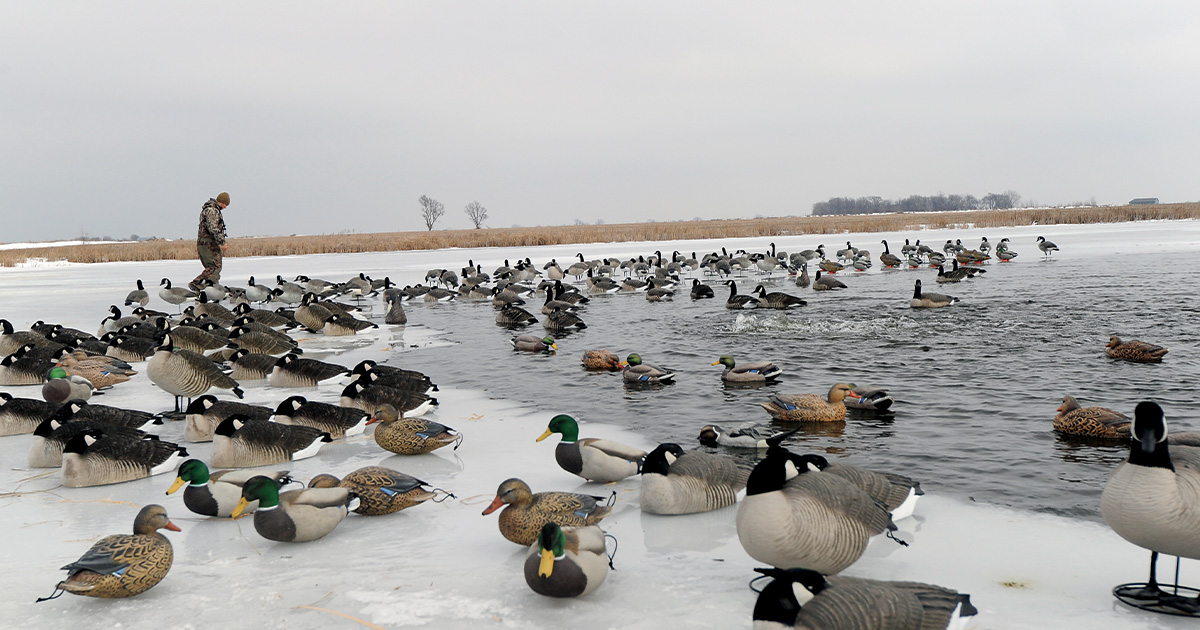
When all of the water in your area is frozen, even a small hole in the ice can attract ducks and geese.
I love a good cold front, and I bet you do too. But sometimes those arctic blasts can be too much of a good thing, because a deep freeze can turn stale ducks into no ducks at all. At times like these, waterfowlers with access to open water have the best chances for a successful hunt.
River hunters often have the most to gain during an extended cold snap, because moving waters are the last to freeze. My hunting buddy Tim Daughrity has hunted the Tennessee, Cumberland, and Mississippi Rivers his entire life. He says river hunting is best when shallow inland waters are frozen, but there can be challenges—launching a boat, for example. “Most boat ramps are built in bays where the water is calm and shallow, and those are the first spots on the river to freeze,” he says. “Sometimes you have to look for the ramps that are more exposed to wind and waves to be able to launch, and then you’ve got to come prepared for a long, cold boat ride.”
The effort can be well worth it. Daughrity says ducks and geese love to gather in the shallows, right on the ice line. Placing goose shells along the edge of the ice shelf and then setting clusters of duck and goose floaters in the open water next to the ice is a deadly decoy strategy. “It looks real, and the birds can’t leave it alone,” he says.
Shallow flooded fields freeze up fast, but resourceful hunters can stay in the game by using agitators, like the Higdon Ice Blaster, to help maintain open holes. Eric Rinehart, manager of North Delta Outfitters in New Madrid, Missouri, says having open water with a few ripples can be magical. “When it’s frozen and you can get a half-acre hole with a little ripple going, crazy stuff can happen,” he says. “I’ve seen days when ducks would finish when we were out in the spread adjusting the decoys.”
Maintaining that open water isn’t always easy. “Keeping open water isn’t as simple as just putting one of those machines out in the field and turning it on,” Rinehart says. “You need to submerge them below the surface to pull warmer water from the bottom to the top.” Some duck fields aren’t deep enough for that, which is something to consider in the off-season. “You want your agitators right in front of the blind, pushing water out into the spread,” Rinehart says. “Rice fields usually have a bar ditch that runs down the edge of the levee that’s deep enough for that. But in other fields it can be helpful to just dig a hole before the season, after the crops come out and before pumping water.”
Rinehart usually runs two agitators on two inverter generators, just to be sure that some water stays open in the event that one unit goes down during the night. “In that weather, you can count on things quitting and breaking,” he says. “You need to be sure generators are serviced and running top-notch in the off-season.”
Although everyone enjoys a daybreak flight, freeze-ups can provide a good excuse for sleeping in. Working around ice is safer in the daylight. Also, sunshine and wind help keep holes from refreezing during the day, and that’s usually when the birds fly best anyway. “Often, the ducks will wait for the sun to thaw things out a bit before they get up to fly,” Rinehart says. “On those days, we’ll often delay the hunt until around 9 a.m.”
Sometimes the best advice is to wait for warmer weather. “If everything around is frozen, you might want to save your vacation days. The thaw is when you want to be out there,” Rinehart says. “It puts hungry ducks on the move, and they’ll follow that freeze line. It might take a couple of days, but if you ask me, hunting the thaw after a hard freeze is about as close as you can get to a guarantee.”

Share this photo


Ducks Unlimited uses cookies to enhance your browsing experience, optimize site functionality, analyze traffic, and deliver personalized advertising through third parties. By continuing to use this site, you agree to our use of cookies. View Privacy Policy