Migration Alert: Indiana and Ohio Hunters Take Advantage of Shifting Weather
Dec. 30, 2025 – Mississippi Flyway – Indiana and Ohio
Dec. 30, 2025 – Mississippi Flyway – Indiana and Ohio


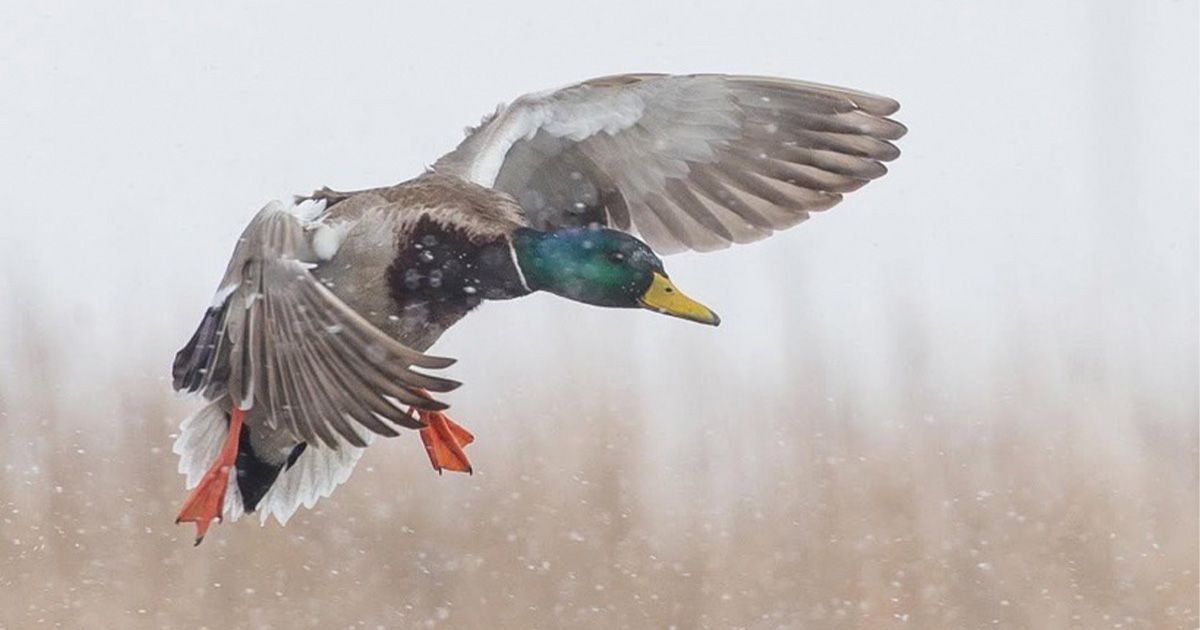
Indiana and Ohio waterfowlers have capitalized on the recent holiday break! For weeks on end, frigid Arctic air froze the landscape and covered it with a thick layer of snow and ice—marshes and lakes frozen, rivers covered with flow ice. Much of this occurred during Indiana’s North Zone split, which forced hunters to focus on goose hunting opportunities, while waterfowlers in the Central and Southern Zones of both states rejoiced as concentrations of mallards and other species crowded into the available open water.
“We’ve had some really good hunts with big pushes of birds over the past month or so,” says Matt Gauer, who hunts the Wabash River bottomlands of southwest Indiana. “My uncle has been hunting Indiana for over 30 years and says he has seen the most mallards this season he can ever recall. Groups of 200 to 300 buzzing the decoys—it has been special.”
Overall, this season has been good in much of the northern tier of both states. “Waterfowl numbers during the month of November were very good in the Lake Erie Marsh Zone,” says Assistant Wildlife Management Supervisor Jim Brown, based at Pickerel Creek Wildlife Area. “Hunting success within the coastal wetlands was what I would consider average to above average during the first couple weeks of our second split. As December rolled in, so did the freezing temperatures and the ice.”
Brown reports that prior to the recent thaw the interior marshes remained almost entirely frozen with ice three to six inches thick in some places. While ice of that magnitude requires more time to degrade, Brown says hunters did have some success in the open waters of eastern Sandusky Bay and Lake Erie, especially for diving ducks, while good numbers of mallards and geese fed in nearby harvested cornfields.
Hoosier hunters likely utilized every single piece of hunting clothing they owned over the past couple of weeks, with temperatures ranging from Arctic cold to balmy sweatshirt weather. The big thaw ramped up slowly last week but once temperatures remained above freezing, conditions bordered on springlike, and that’s when things really got rolling. Rolling north that is.
“It's been an interesting few weeks in northern Indiana. We were hunting in 10 inches of snow and mid-20s temps, and quickly transitioned to zero snow and temps in the 40s,” Brodie Delcamp, a northern Indiana hunter, says. “Two days ago, on the last day of the duck season in Indiana’s North Zone (also, the late two-day split in nearby Michigan’s South Zone) we hunted in pouring down rain and 60 degrees. The first duck that decoyed in our field set was a green-winged teal. We also added wigeon, mallards, and black ducks to the straps. We saw more flocks of pintails than I’ve ever seen around here—absolutely insane numbers.”
Delcamp’s observations of pintails is a sentiment held by numerous waterfowl hunters across the northern half of Indiana, as what can only be described as a massive reverse migration that occurred last weekend during south winds and springlike conditions. Reports of huge flocks of pintails working both water and field spreads in the fog and rain were commonplace. Also making the trip north were mallards, as well as hearty adult greenwings, wigeon, and gadwalls. Strong numbers of Canada and white-fronted geese were also reported in many areas including the usual specklebelly hotspots in Indiana.
While cold weather has settled back in, it may take a day or two for things to reset, but it’s highly likely waterfowl will be returning to their winter hangouts along major river systems in the South Zones of both states.
Delcamp gives some insight into how quickly the brief temperature relief was, “Tuesday morning it’s 16 degrees and feels like three with windchill up here in the north, and the ground is covered with six inches of fresh snow. Seeing some of the pintails and plenty of mallards over our goose spread, but I doubt they’ll stick around much longer with the frigid forecast. There are lots of Canada geese around with all the water that opened back up, but a lot of that will freeze the next couple of nights.”
Given the forecast, open water will become an issue in many areas, especially in the north. Expect wayward ducks and some geese to retreat to the south over the next week to ten days, until the next big thaw.
Stay up to date with the latest migration information.

Share this photo


Ducks Unlimited uses cookies to enhance your browsing experience, optimize site functionality, analyze traffic, and deliver personalized advertising through third parties. By continuing to use this site, you agree to our use of cookies. View Privacy Policy