Migration Alert: Waterfowl Push Underway Through New Jersey and Delmarva Peninsula
Dec. 19, 2025 – Atlantic Flyway – Delaware and New Jersey
Dec. 19, 2025 – Atlantic Flyway – Delaware and New Jersey



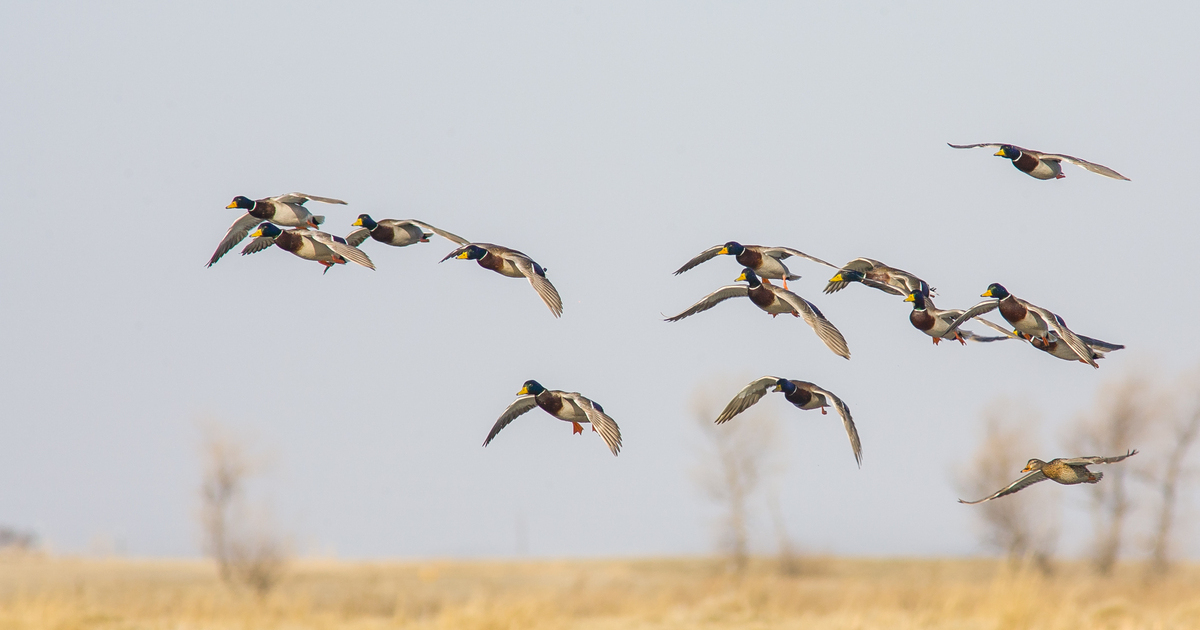
The prolonged cold snap over the last few weeks coupled with wintry precipitation in the North Atlantic seems to have set the table for New Jersey and Delaware waterfowlers beginning the last split of the season. Except for the southernmost reaches of the region, the cold temperatures succeeded in icing over impoundments, ponds, and other smaller bodies of water, but hunters accessing open water are still likely to find birds.
DU New Jersey State Chairman Scott Paterson hunts often and keeps a watch on things from his home near Sandy Hook. “The teal are long gone, along with most of the wood ducks,” he says. “Everything those birds would use is frozen, so they’ve pushed on, but you might still see some greenwings down at the far southern end of the state.”
Late October and mid-November saw a lot of wood ducks and green-winged teal inland and black ducks along the coast, reports Austin Damminger, a senior biologist with New Jersey Fish and Wildlife. “With the recent cold temps, some birds have pushed south, but a majority have shifted around to open water.”
Damminger says migration into the Garden State is looking good. Canada geese started arriving in September and numbers have increased with the cold start and early snow in December. Paterson says Canada goose numbers are strong, but adds, “no one is really looking for them with the one-bird limit this year.”
The big surprise, according to Paterson, was the early arrival of gadwalls and wigeon from Raritan Bay (which separates New Jersey and New York’s Staten Island) all the way into southern New Jersey. “The broadbills arrived on schedule and are building in numbers up and down the coast. Brant have been here since Labor Day, and they’ll be around until Memorial Day. I’m also seeing a lot of buffleheads and some ruddy ducks. I have heard reports of pintails in the southern part of the state. I’m not seeing a ton of mallards, and it’s hard to figure out if they’re resident birds or Canadian birds pushing down. We’re hoping this cold weather pushes more black ducks and mallards.”
Damminger says that scaup numbers increased dramatically in late November, with flocks in the thousands along the coast. “With the cold of early December, a lot of locations have frozen up,” he notes. “If you find open water, though, you should be in for a good hunt.”
Paterson is eager to get back out. “I’ve had a couple of nice hunts, including some in areas where I don’t do well until January, so I’m really optimistic heading into the end of the season,” he says.
In neighboring Delaware, recent cold weather pushed birds into the Delmarva Peninsula, reports Cole Tiemann, waterfowl and migratory gamebird biologist with Delaware Fish and Wildlife.
“Last week, there were consistent pushes of Canada geese from the north, and our aerial surveys have seen notable increases in mallards and American black ducks as well. The third segment of Delaware’s duck season opens December 17, and the first segment of goose season opens December 20. There is a lot of anticipation for both openers,” Tiemann notes.
Tundra swans are also showing up in their usual locations, and even though their arrival is a little late, some swan hunters are filling their tags. Large flocks of snow geese also arrived recently near Bombay Hook and Prime Hook National Wildlife Refuges. “The recent cold weather and snow has been concentrating birds in areas of open water, which will make it advantageous for those who hunt tidal areas or have access to open water elsewhere,” Tiemann says.
James Joachimowski, impoundment and habitat biologist for Delaware Fish and Wildlife, says waterfowl seem to be holding tight where there is open water. He says most public access coastal impoundments and freshwater ponds will be iced over for the opening day of the final split. “However, the 10-day forecast shows a slight warming trend,” he adds. “Therefore, heavy icing isn’t much of a concern, and all areas should be accessible as we move into late December. The waterfowl using these impounded areas may have been temporarily displaced to tidal open water areas but should quickly return as the ice melts.”
Stay up to date with the latest migration information.

Share this photo


Ducks Unlimited uses cookies to enhance your browsing experience, optimize site functionality, analyze traffic, and deliver personalized advertising through third parties. By continuing to use this site, you agree to our use of cookies. View Privacy Policy