Migration Alert: Multiple Factors Fuel Chesapeake Bay Waterfowler’s Optimism
Dec. 5, 2025 – Atlantic Flyway – Chesapeake Bay
Dec. 5, 2025 – Atlantic Flyway – Chesapeake Bay



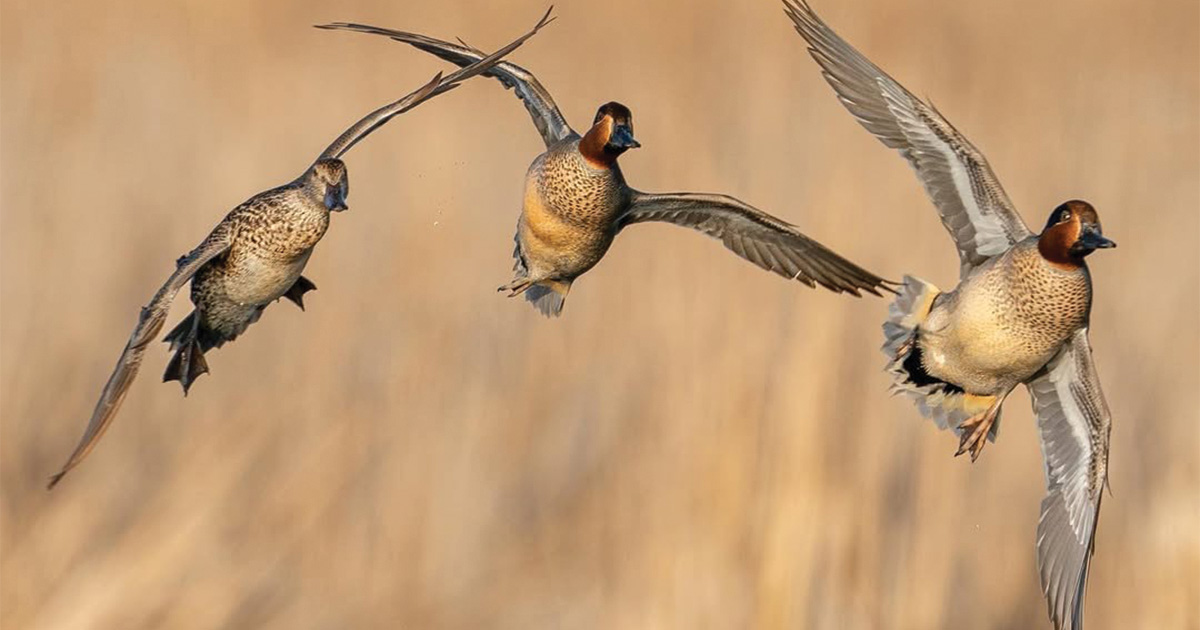
Every year, waterfowl hunters around the Chesapeake Bay eagerly watch weather forecasts, hoping Mother Nature will freeze wetlands in the states to the north. The recent icy blast in the Midwest, coupled with expected multiple days of below-freezing temperatures and snow across the Northeast, has anticipation building. And the last “supermoon” of the year might prompt a push of high-flyers southward.
Habitat conditions are on the upswing. Much of Maryland, for example, is recovering from drought conditions experienced last year. Kayla Harvey, waterfowl project leader for the Maryland Department of Natural Resources, says, “Any rain-dependent wetlands and impoundments managed for waterfowl are still quite dry, unless there is access to a well.”
Recent rainfall has improved habitat around the bay, however, including impoundments and fields on the U.S. Fish and Wildlife Service’s extensive refuge complex on the Eastern Shore. Brian Boutin, deputy refuge manager for the Chesapeake Marshlands National Wildlife Refuge (NWR) Complex—which includes Blackwater NWR, Eastern Neck NWR, Martin NWR, and Susquehanna NWR—says moist-soil plant production was excellent this year on the Blackwater Refuge. While water levels remain low, Boutin says the recent rainfall is drawing waterfowl into managed impoundments and fields.
The numbers of common species such as Canada geese, northern pintails, mallards, and green-winged teal seem below average for early December, and the freshwater habitats on Eastern Neck Refuge have been dry and consequently holding relatively few birds, Boutin explains. Tidal waters around the island, however, are seeing increases, especially diving ducks.
Jake McPherson, DU’s managing director of development in the region, says parts of the Eastern Shore received more than 1.5 inches of beneficial rain in recent days. He has heard mixed reports, with birds showing up in some areas and disappearing in others. “I really have not personally hunted much in the Mid-Atlantic this season, but I did have a great shoot on the November opener in Maryland in Dorchester County—mostly teal and pintails,” McPherson notes.
Harvey says she also heard mixed reports from hunters during the first and second splits of Maryland’s duck season. “Puddle duck numbers in some areas seemed sparse, while other hunters reported quality hunts with freshly arrived birds—mainly mallards, black ducks, green-winged teal, and a few pintails—in the second split. Sea duck hunters have reported some successful hunts with good numbers of birds, mostly scoters, both surf and black varieties,” she adds. “Migratory Canada geese have begun arriving in larger numbers as the weather has gotten colder, and hunters will be looking forward to the start of the migratory goose season on December 19. Overall, we are hopeful for good amounts of rainfall and cold weather to continue to push birds south before the beginning of our third segment.”
Ben Lewis, a waterfowl biologist with the Virginia Department of Wildlife Resources, says hunters had a decent second split in his state—nothing “glowing” but few complaints. “With the relatively colder temperatures, I think there were above-average numbers of wood ducks in the area,” Lewis says. “The continued cold, winter weather north of us has me optimistic that we will be set up nicely for a great second split for divers and larger puddle ducks.”
Sea ducks are still working their way south. Geese arrived early, and Lewis expects their numbers to build. But, he adds, “Early arrival of geese is not necessarily a good thing, as it is an indicator of poor nesting the prior year.”
DU Regional Biologist Amanda Hoyt also expresses optimism. “There seems to be more weather coming our way at the end of this week. We have been seeing some high-flying flocks of Canada geese, which isn’t surprising given that New York is starting to freeze. Swans have started to arrive, and I would anticipate decent duck numbers for the upcoming split in our area,” she says.
Stay up to date with the latest migration information.

Share this photo


Ducks Unlimited uses cookies to enhance your browsing experience, optimize site functionality, analyze traffic, and deliver personalized advertising through third parties. By continuing to use this site, you agree to our use of cookies. View Privacy Policy