Understanding Waterfowl: Fascinating Hybrids
New duck DNA research is providing fresh insights about these rarities of nature
New duck DNA research is providing fresh insights about these rarities of nature


By Katie Tucker, Ty Sharrow, and Kayci Messerly

The duckDNA project revealed that this unusual bird was the offspring of a northern shoveler and a blue-winged teal × cinnamon teal hybrid.
In an instant, you knew it was different. Perhaps its tail was too long, its bill was oddly shaped, or its wing patterns didn’t match other ducks. Carefully examining the bird in hand, you soon realized that you had just harvested a hybrid, the result of a mating between two different species. Hybrids are highly coveted by hunters, but most will never see a hybrid, let alone knowingly harvest one. Some calculations put the chances of harvesting a hybrid duck at less than 1 in 5,000, or 0.02 percent. Yet new findings suggest that these birds may be more common than previously thought.
Thanks to modern genetics and innovative hunter-assisted science, researchers are poised to learn more about these birds than ever before. For example, through duckDNA, a science initiative in which hunters submit tissue samples from harvested waterfowl, we have already received samples from over 375 ducks and geese of presumed hybrid origin. In this article we explore common questions about hybrids and consider future opportunities to learn about their genetic makeup.
Hybridization is well documented among birds, but waterfowl hybridize more frequently than any other avian group. Several hypotheses may explain the incidence of hybrids in waterfowl. A recent study from the University of Washington identified forced copulation, in which a male forcibly mates with a female of a different species, as the most frequent cause of hybridization. By examining the maternally inherited mitochondrial DNA of hybrids, researchers discovered that the occurrence of forced copulation is typically determined by body size and male reproductive anatomy. For example, mallard × gadwall hybrids most often result from drake mallards mating with hen gadwalls. Yet, mallard × pintail hybrids typically occur from drake pintails mating with hen mallards.
Hybrids may sometimes result when ducklings imprint on and later breed with a species other than their own. This is most likely to occur with species for which nest parasitism is a common strategy, whereby a female of one species lays its eggs in the nest of a different species. This could explain hybrids involving redheads and canvasbacks or Barrow’s and common goldeneyes. But theoretically, imprinting on a different species should mostly affect male ducklings or goslings in the production of hybrids, as males base mate choice on imprinting early in life, while mate choice in females is genetically encoded.
Hybrids may also result from desperation, when an individual of an exceedingly rare species chooses to mate with another species rather than not breeding at all. Alternatively, the female may simply find a mate of a different species more attractive due to novel traits or unique behaviors. New research suggests this may explain why American wigeon hens sometimes mate with Eurasian wigeon drakes, even when American wigeon drakes are available.
The most common hybrids submitted through duckDNA involve species in the mallard family. This was expected, given how closely related these species are, their abundance, and their overlapping distributions. The duckDNA project provides further details about hybrid origins, such as whether birds are first-generation hybrids (the immediate offspring from a mating between two species) or later-generation hybrids (resulting when hybrids “backcross” with a member of their parent species). We have even documented instances when a hybrid has mated with a species other than either of its parents, producing offspring carrying the genetics of three different species.
Results from duckDNA also show that American black duck × wild mallard hybrids might be more widespread than previously thought, occurring as far west as California. These westernmost hybrids are typically second- or third-generation hybrids, the likely result of dispersal of first-generation hybrids from the Atlantic Flyway. Many of these later-generation hybrids look like a typical mallard, but DNA reveals their true identity. In fact, we are learning that many hunters likely have harvested a hybrid and just didn’t know it.
Outside the mallard family, the most common hybrid combination submitted to duckDNA is the mallard × gadwall hybrid, also known as the Brewer’s duck. The Brewer’s duck was once thought to be a separate species. John James Audubon illustrated one of these birds after an encounter in Louisiana in 1822 and named it for his friend, Thomas M. Brewer. Yet in 1943, ornithologist Francis Kortright determined that the Brewer’s duck was in fact a hybrid between a gadwall and mallard. Today, duckDNA continues to document the wide variation in appearance and distribution of Brewer’s ducks.
he short answer is “it depends.” Hybrids between closely related species are more likely to have fertile offspring. For example, duckDNA participant Nick Barr submitted a hybrid that was shown to have resulted from the mating of a northern shoveler with a blue-winged teal × cinnamon teal hybrid. All three species belong to the genus Spatula, so it makes sense that their genetics would not have diverged far enough to be reproductively incompatible. Other examples come from the mallard family, in which we frequently encounter second- or third-generation offspring involving three species, showing that hybrids of these closely related species survive to maturity and are fertile. Similar rules apply for geese—the more closely related two species are, the more likely they are to produce fertile offspring.
Yes, at least in theory. A one-off hybrid by itself does not make a new species. However, if hybrids with the same genetic origins mate and produce fertile offspring in sufficient numbers and their offspring become reproductively isolated from their parent species, either physically or behaviorally, this could result in the rise of a new species. For example, Dr. Philip Lavretsky and colleagues found evidence that the Steller’s eider may have originated from frequent hybridization between long-tailed ducks and true eiders.
Even if a new species does not emerge, hybridization may allow a novel trait from one species to become integrated into the population of the other. For example, the blue-phase Ross’s goose may be the result of historical hybridization with blue-phase lesser snow geese, with the genes for blue plumage remaining in the population to this day. In the case of human-induced hybridization, such as what occurs between wild and released game-farm mallards, hybridization may introduce traits that are poorly adapted to natural environments.
While duckDNA has provided a wealth of new data about waterfowl hybrids, we still have much to learn about this phenomenon. Whether studying hybridization among geese, investigating how hybridization affects the genetic stability of species with small population sizes, or testing additional hypotheses about how hybrids are produced, new analytical methods and the growing database of hybrid genetics ensure that exciting discoveries are ahead. The degree to which hybridization will shape management decisions remains to be seen, but in the meantime, let’s all enjoy learning more about these fascinating birds.
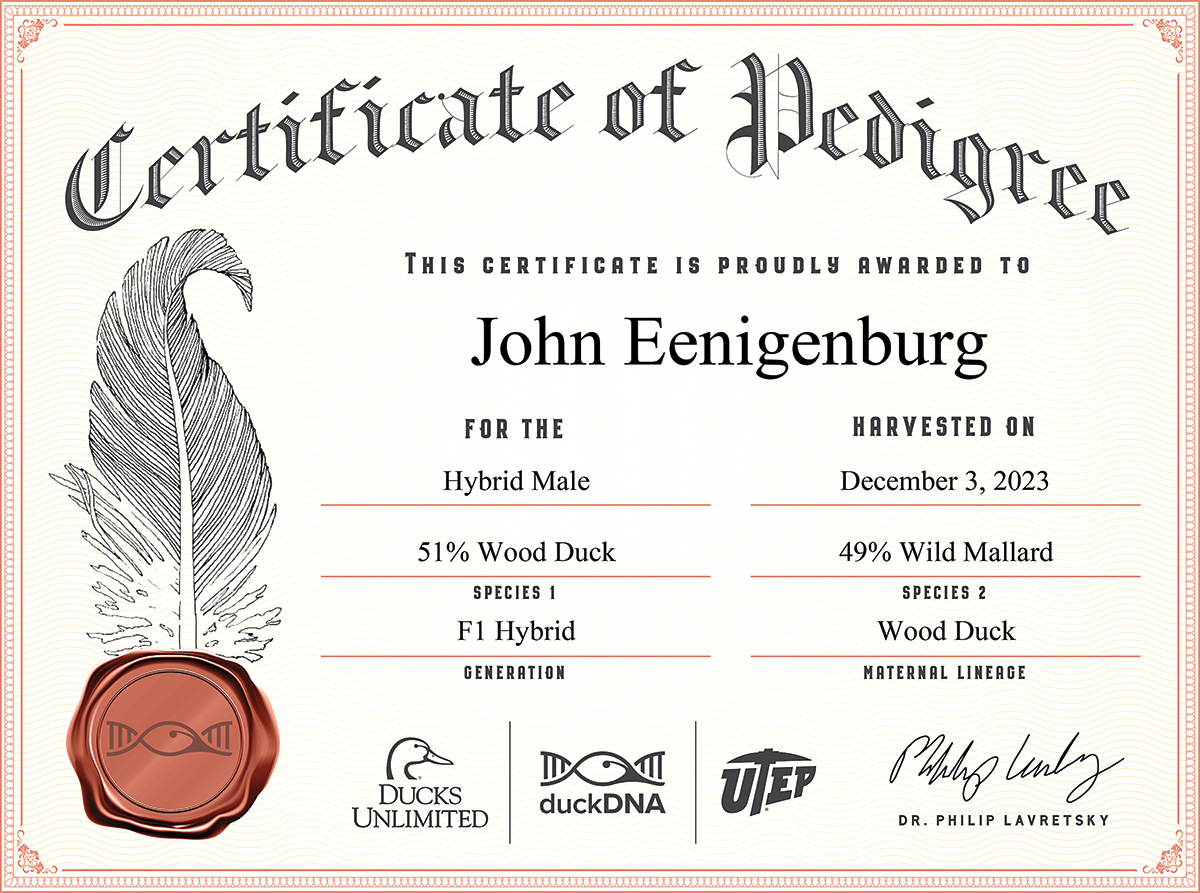
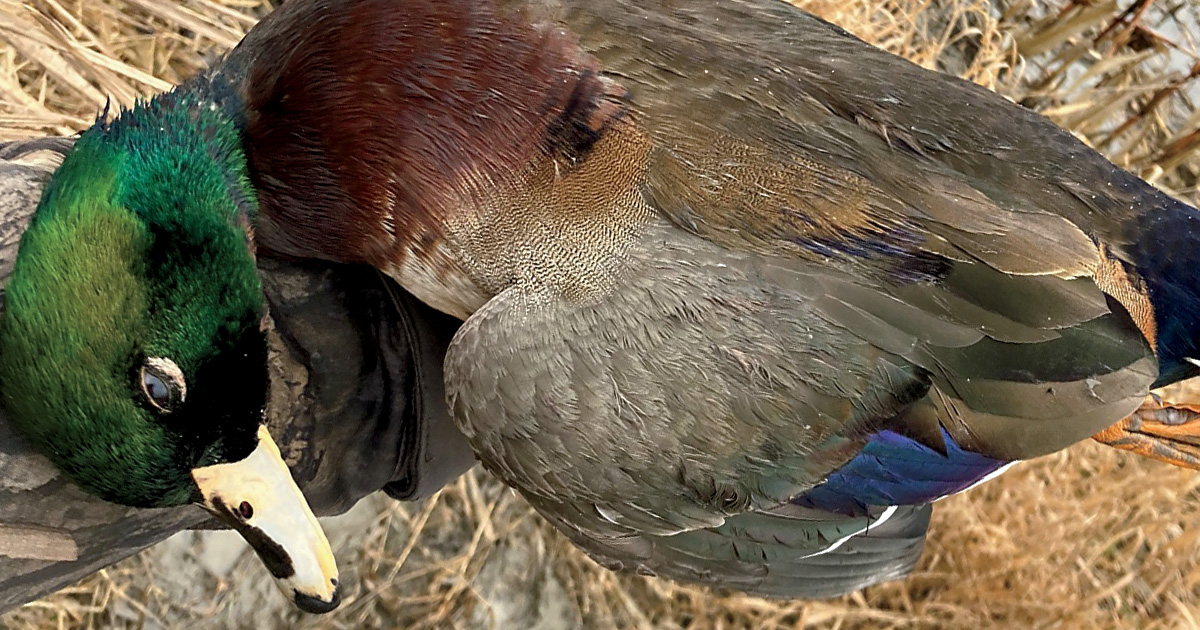
The diversity of hybrid combinations and their physical characteristics are astounding. Through the duckDNA project alone, we have identified 34 hybrid combinations of wild ducks and geese. Visit the duckDNA website (duckDNA.com) to see the full list with accompanying photos, and be sure to follow us on Instagram (@theduckdna) and Facebook (@DuckDNA) for weekly updates.
Katie Tucker, Ty Sharrow, and Kayci Messerly are conservation science assistants leading the duckDNA project at DU national headquarters in Memphis.

Share this photo


Ducks Unlimited uses cookies to enhance your browsing experience, optimize site functionality, analyze traffic, and deliver personalized advertising through third parties. By continuing to use this site, you agree to our use of cookies. View Privacy Policy