Field Reports: 2026 Early-Spring Habitat Outlook
An overview of landscape conditions in key areas for waterfowl
An overview of landscape conditions in key areas for waterfowl


By DU Field Biologists
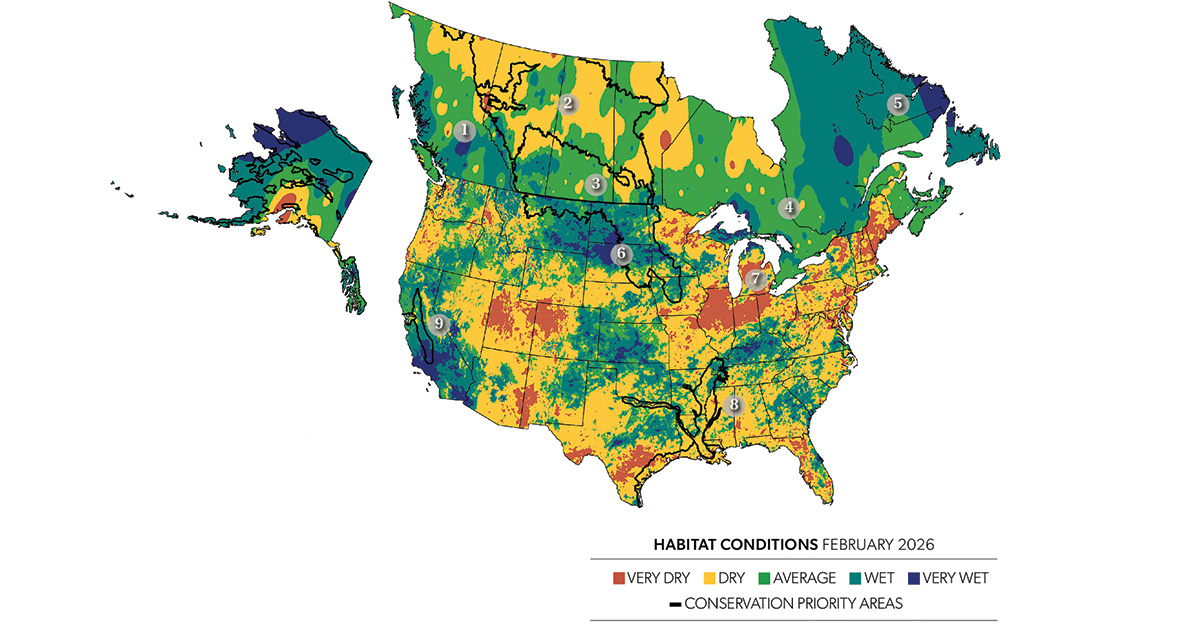
DATA SHOWS PALMER DROUGHT INDICES WITH CATEGORIES CONSOLIDATED AND COLORED TO MATCH CURRENT CONDITIONS. CLIMATE ENGINE. 2026; DESERT RESEARCH INSTITUTE AND UNIVERSITY OF IDAHO. ACCESSED ON FEBRUARY 2, 2026; HTTP://CLIMATEENGINE.ORG. NOAA NATIONAL CENTERS FOR ENVIRONMENTAL INFORMATION AND AGRICULTURE AND AGRI-FOOD CANADA.
In the interior of British Columbia, winter has been wetter and warmer than average, particularly in the south. Snowpack in this area is near average, and spring water levels are expected to be favorable for migrating and breeding waterfowl. Coastal regions have also experienced warm, wet weather, keeping wetlands ice-free for wintering waterfowl.
Across much of this vast region, bitter-cold temperatures have created a good frost seal, and a generally stable, yet slightly below-average snowpack is in place. Current conditions are favorable for a healthy spring runoff in many areas, which should help recharge wetlands depleted by last year’s drought.
Water levels and soil moisture remain low across the Canadian prairies after several consecutive dry years, although the extent and severity of drought have decreased. Winter precipitation has been near average in Alberta and Saskatchewan and slightly below average in southwest Manitoba. Midwinter warming has reduced the snowpack in the south, but this has helped water infiltrate the soil and create a good frost seal, improving runoff prospects in areas that receive significant snowfall.
Winter has been colder than average, with early and midseason freezes creating a good frost seal and pushing most waterfowl south. Although snowfall came later than normal, the snowpack is better than average in many areas. Overall, the region is heading into spring with good runoff potential and strong prospects for healthy wetland recharge.
Above-average fall and early-winter precipitation raised water levels across much of Atlantic Canada after a very dry summer. Winter weather in this region has consisted of long periods of bitter-cold temperatures and snow mixed with periodic thaws. As of late January, most tidal rivers and bays were frozen, although small tidal creeks were still open in places, providing habitat for American black ducks and other hardy species.
Early January brought above-average temperatures to the Prairie Pothole Region and melted much of the snow that had accumulated earlier in the winter. Late January brought below-zero temperatures, high winds, and variable snowfall amounts. High winds associated with these winter storms packed many wetland basins with snow, which will help fill potholes this spring.
Despite a massive January snowstorm, winter precipitation has been stingy throughout the Great Lakes and northeastern states, leaving large areas of abnormally dry to extreme drought across both regions. Significant late-winter and spring precipitation will be needed to improve wetland conditions for breeding and brood-rearing waterfowl. Recent extreme cold has largely kept migrating waterfowl from returning in large numbers.
Texas remained dry and warm until late January, which severely limited water on the landscape. Even coastal areas were drier than average, and suitable waterfowl habitat was mostly limited to managed habitats that could pump water. Conditions in coastal Louisiana improved from December to January, and waterfowl numbers did as well. According to aerial surveys, the number of waterfowl in the state was higher than the most recent five- and 10-year averages. Unfortunately, the lower Mississippi Alluvial Valley continued to experience extremely dry conditions, and wintering waterfowl numbers were below average in many areas. Rainfall was also limited in much of the South Atlantic region, but areas with water had good habitat and held good numbers of waterfowl.
The Pacific Northwest received a series of major precipitation events this winter, with strong atmospheric rivers causing major flooding in Washington. California also experienced atmospheric rivers that resulted in numerous public hunting areas being closed due to flooding. Reports indicate that the Sacramento Valley experienced an influx of waterfowl in late January. Similarly, waterfowl numbers appear to be increasing in the Klamath Basin as spring approaches.

Share this photo


Ducks Unlimited uses cookies to enhance your browsing experience, optimize site functionality, analyze traffic, and deliver personalized advertising through third parties. By continuing to use this site, you agree to our use of cookies. View Privacy Policy