Rebuilding a Legacy
DU Canada is upgrading many of its older projects to maintain their productivity for waterfowl and people
DU Canada is upgrading many of its older projects to maintain their productivity for waterfowl and people


By Glen Kirby
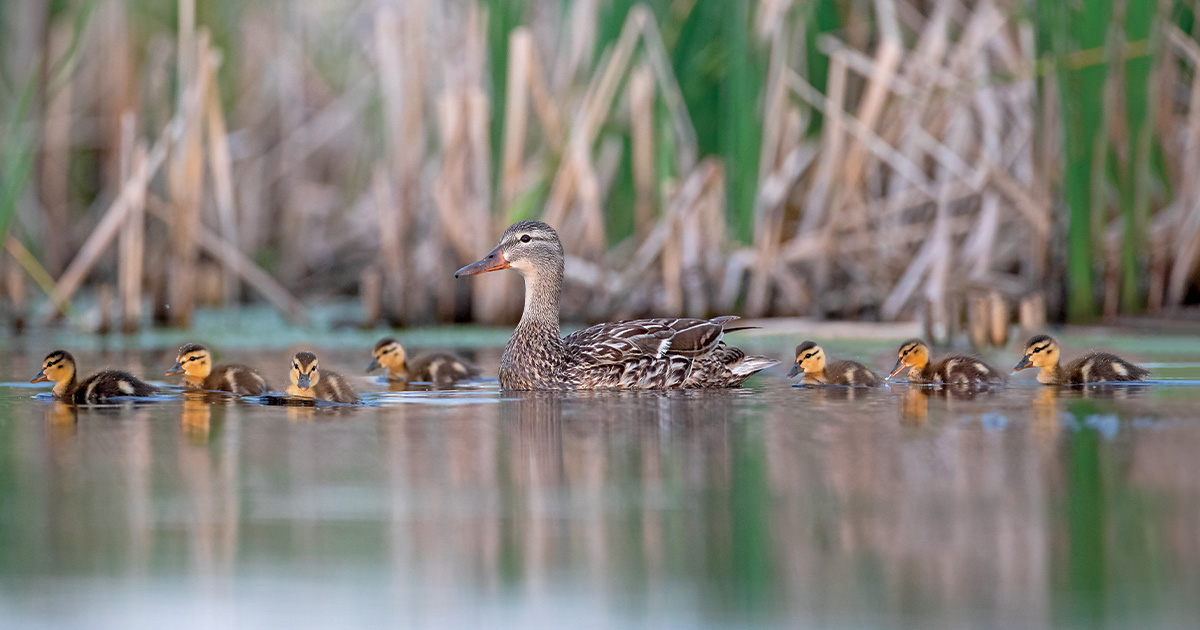
As a young boy in the 1950s, Cameron Dodds watched Ducks Unlimited Canada (DUC) build a dam on the family farm near Kenton in southwest Manitoba. In the fall of 2024, he saw that same life-giving dam refurbished using state-of-the-art construction equipment
and materials.
“Without water, you just don’t have anything,” says Dodds, who operates Hales Creek Farm with his partner, Bea Janssens. “It’s just been a great thing to be able to have that resource there when we need it. It’s important.”
The 450-foot-long earthen dam is clearly visible from the front window of his farmhouse, past the cattle pens, hay bales, and barn buildings. Dodds says his family first dammed the creek running through their property in 1900 to provide water for livestock and household use.
“There’s no real groundwater here,” says Dodds, who has journals and diaries from the early settlers showing that they tried drilling wells too. “It must have been a tremendous amount of work for the family to accomplish that. But the idea was to source themselves a good supply of water.”
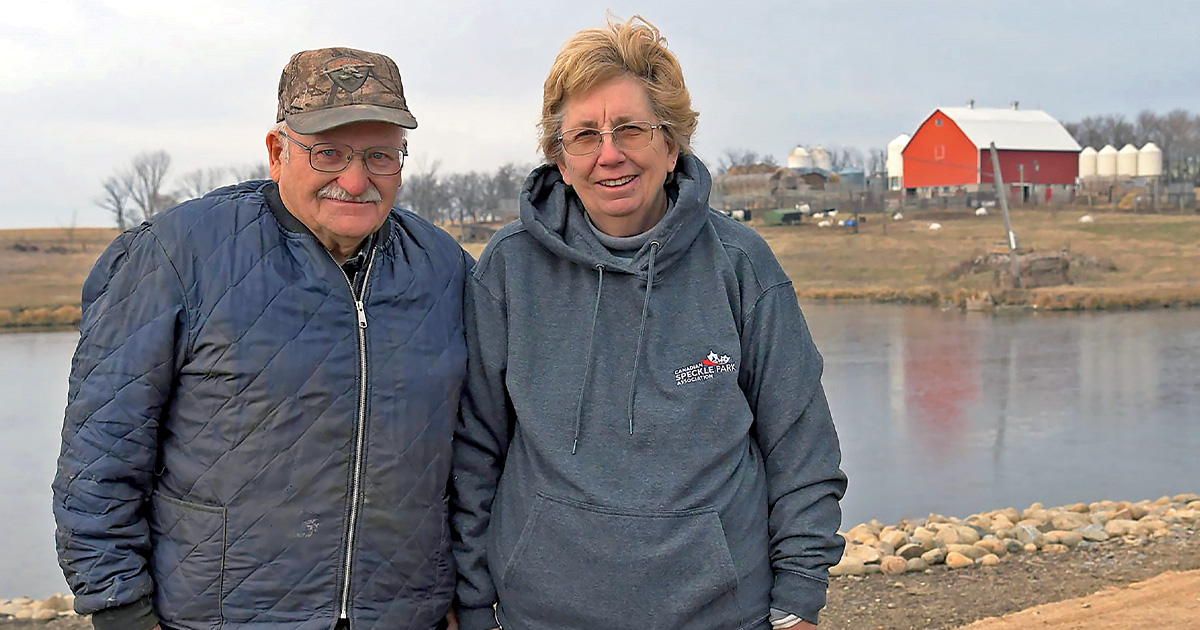
Cameron Dodds and Bea Janssens operate a farm near Kenton, Manitoba. Ducks Unlimited Canada (DUC) recently rebuilt the earthen dam holding water on their property. Dodds watched DUC crews install the original dam in 1958, when he was seven years old.
DUC became involved in 1958, rebuilding the existing dam to better serve the farm while also providing new habitat for waterfowl. Workers towed their own trailers to stay on-site during construction, and the project left an indelible mark on Dodds.
“I was just a seven-year-old kid, so anything like this was really interesting. I remember the boys taking me for a ride on the heavy equipment when they were excavating,” Dodds recalls.
The dam is among DUC’s 240 “legacy” wetland projects in Manitoba, which were constructed during the organization’s first 50 years of operation. Those wetlands cover a combined area that is twice as large as the city of Winnipeg.
In 2024, DUC spent more than $1.5 million to repair water-control structures and other infrastructure on legacy projects, including the dam on the Dodds farm. Erosion and cattle traffic had degraded the dam since the last renovations were completed in 1983.
Shaun Greer, DUC’s head of habitat asset management in Manitoba, says the Dodds’s wetland project is a great example of long-term agricultural sustainability working in tandem with habitat conservation. “This area has very little permanent water,” Greer notes. “The DUC project in 1983 added a foot of water and three more acres of wetland. This increased the water availability for livestock and increased habitat acres on the landscape.”
Greer says other recent repairs of legacy projects include a $1 million restoration project at Proven Lake, which is located in one of North America’s most productive waterfowl breeding areas. Another restoration project is currently under way at Lizard Lake wetland, a 40-year-old site. Managed with local partners, Lizard Lake provides haying opportunities for farmers and hosts staging mallards, northern pintails, and Canada geese. With strong community ties, Lizard Lake remains vital for environmental education and wildlife in the area.
“DUC continues to manage and maintain our legacy projects in Manitoba and across Prairie Canada,” Greer says. “With ever-increasing engineering standards and rising costs for equipment and materials, DUC is seeking innovative funding and partnership opportunities to manage these vital wetlands for waterfowl and local landowners.”

Share this photo


Ducks Unlimited uses cookies to enhance your browsing experience, optimize site functionality, analyze traffic, and deliver personalized advertising through third parties. By continuing to use this site, you agree to our use of cookies. View Privacy Policy