Ducks Unlimited Announces 2026 Wetland Conservation Achievement Award Winners
Every year, DU celebrates those who dedicate themselves to protecting North America’s wetlands and waterfowl
Every year, DU celebrates those who dedicate themselves to protecting North America’s wetlands and waterfowl


MEMPHIS, Tenn. – Ducks Unlimited (DU) recently announced the recipients of its 2026 Wetland Conservation Achievement Awards, honoring individuals and groups whose work has significantly advanced wetland and waterfowl conservation across North America. The awards were presented during this year’s North American Wildlife and Natural Resources Conference in Columbus, Ohio.
“Our 2026 Wetland Conservation Achievement Award honorees remind us of what’s possible when passion meets purpose,” said DU Chief Conservation Officer Dr. Karen Waldrop. “Their dedication, along with the steadfast support of all our members, volunteers, supporters and partners, fuels wetland conservation that changes landscapes and lives. To each award winner, your commitment is writing the next great chapter of North America’s wetlands story, and we celebrate you with heartfelt gratitude and pride.”
The 2026 Wetland Conservation Achievement Award winners are:
Federal Elected/Appointed Official

Representative Glenn “GT” Thompson, chairman of the House Agriculture Committee
Chairman of the House Agriculture Committee, Glenn “GT” Thompson, is a proven champion for conservation through his leadership in defending the Farm Bill’s more than $10 billion in Natural Resources Conservation Services (NRCS) conservation funding. He has led a bipartisan effort to protect this historic investment, the country's single largest source of conservation funding. He has strongly advocated for key voluntary NRCS programs, including the Agricultural Conservation Easement Program (ACEP), the Conservation Reserve Program, and the Conservation Stewardship Program (CSP). With most of the nation’s remaining wetlands located on private lands and farmland, Farm Bill conservation programs are essential to protecting these critical ecosystems. Thompson’s leadership will leave a legacy for America’s farms, wetlands, and wildlife.
Federal Agency Employee
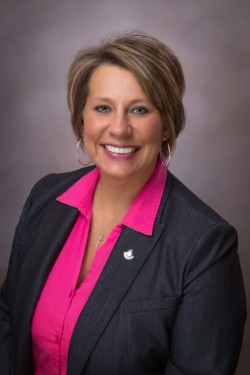
Karen Woodrich, USDA-NRCS deputy chief for programs
With more than 25 years of service at the U.S. Department of Agriculture, Karen Woodrich has demonstrated a deep and enduring commitment to conservation and to supporting America’s farmers and ranchers. She began her career with NRCS as a soil conservationist and has since served as state conservationist in Kentucky and Kansas, bringing a strong scientific foundation and practical experience to her leadership. As deputy chief for programs, she oversees the agency’s critical voluntary conservation programs in the Farm Bill, including the Environmental Quality Incentives Program, CSP, ACEP, and the Regional Conservation Partnership Program, all of which are essential to conserving wetlands and working lands on private property. A dedicated advocate for science-based, voluntary conservation, Woodrich has been an invaluable partner to Ducks Unlimited.
State Elected/Appointed Official

Governor Henry D. McMaster, South Carolina
Under Governor Henry McMaster’s leadership over two terms, partners conserved over 229,000 acres of historic and environmentally significant land. He helped secure over $300 million for land and water conservation. In 2025, he set an ambitious agenda to conserve 10 million acres across South Carolina. DU has been a key partner in the planning effort to ensure that wetland conservation priorities are incorporated. DU will be a key delivery partner to accomplish this work, including land acquisition with fee title and voluntary conservation easements on private lands. DU’s role in voluntary land protection through easements is unmatched, as we hold easements on over 150,000 acres in the Palmetto State. Governor McMaster has repeatedly stated that voluntary land protection is a key solution to South Carolina’s most pressing challenges: unchecked growth and sprawl, declining water quality, increasing flood risks, and the critical need for rural economic resilience. Last fall, McMaster announced a project to protect over 62,000 acres in the Pee Dee Basin, representing the largest easement by acreage in state history. This easement protects vital habitat for at least 115 plant and animal species, including migratory birds, rare mussels, and Atlantic and shortnose sturgeon. It also preserves 30,000 acres of bottomland hardwood forest that absorbs floodwater and buffers downstream communities from severe weather events. In addition, more than 7,500 acres of this project will become publicly accessible upon completion. These lands will support hiking, hunting, fishing, and wildlife viewing, activities that generate $2.74 billion in economic activity for the state each year.
More recently, Governor McMaster was part of the announcement of one of the most significant voluntary conservation easements in U.S. history, the permanent protection of nearly 4,400 acres at Clarendon Farms in South Carolina’s Lowcountry, made possible by the extraordinary generosity of Cox Enterprises and the Cox family.
State/Provincial Agency
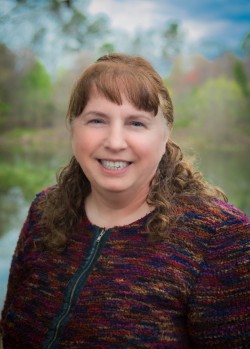
Becky Gwynn, Virginia Department of Wildlife Resources executive deputy director
Becky Gwynn has dedicated 38 years to the Virginia Department of Wildlife Resources (VDWR) and currently serves as the Department’s executive deputy director, exemplifying collaborative and servant leadership in conservation. Throughout her career, Becky has advanced the conservation of wetlands and associated upland habitats to benefit migratory birds, wildlife, and the people of the Commonwealth of Virginia, earning a reputation for integrity, diligence, and partnership. During her tenure with VDWR, Becky has held numerous leadership roles, led the development of Virginia’s first Wildlife Action Plan, secured tens of millions of dollars for habitat conservation, and championed land protection efforts resulting in the perpetual conservation of more than 72,000 acres statewide, including over 12,000 acres protected in partnership with Ducks Unlimited. She has also played a leading role in wetlands restoration across the Chesapeake Bay Watershed, helping secure significant federal investments that advance conservation and climate resilience, many of which are implemented alongside DU.
Research/Technical

Dr. Siobhan Fennessey, Kenyon College professor of Biology and Environmental Studies
Dr. Siobhan Fennessy has been a leader in wetlands science and conservation for nearly three decades, making lasting contributions to research, policy, and education. A globally respected scientist, she has held numerous leadership roles, including serving on the United States delegation to the United Nations’ Intergovernmental Platform on Biodiversity and Ecosystem Services and as a Scientific Expert and Vice Chair of the Ramsar Convention’s Scientific and Technical Review Panel. Her work has helped connect wetlands science to conservation policy and practice at national and international scales. A fellow of the Society of Wetlands Scientists and a trusted advisor to institutions such as the U.S. National Academies of Sciences, Dr. Fennessy’s research has shaped how wetlands are studied, restored, and valued. Currently the Philip and Sheila Jordan Professor of Environmental Studies and Biology at Ohio’s Kenyon College, she has authored more than 60 peer‑reviewed publications, co‑authored foundational wetland textbooks, and produced influential research supporting conservation programs such as the Conservation Reserve Program and Wetland Reserve Program. Equally important is her legacy as a mentor and educator. Through hands-on research and inclusive leadership, Dr. Fennessy has trained and inspired generations of wetland scientists, many of whom now serve in key roles advancing conservation across government organizations and Ducks Unlimited.
Local/Private Conservation

Larry Maxwell, Oregon
Larry Maxwell is a fourth-generation rancher and owner-operator of Maxwell Cattle Inc. in Lake County, Oregon, where his family ranch spans thousands of acres in the Goose Lake Basin. Through the continued use of flood irrigation practices that mimic natural floodplain hydrology, Maxwell has shown that working ranchlands can support both family-owned agricultural operations and critical wetland habitat for migratory waterfowl in the Pacific Flyway. Since 2004, he has been a dedicated partner to Ducks Unlimited, helping secure more than 900 acres of wetland habitat under permanent conservation easements through the North American Wetlands Conservation Act. Beyond land protection, he has voluntarily implemented and supported a wide range of restoration efforts on and adjacent to his properties, helping restore and protect 1,500 acres in the area. These projects include stream restoration, infrastructure upgrades and innovative solutions, such as installing one of the first rock‑chute fish passage structures in the Goose Lake Basin. A trusted advocate and leader within his community, he has extended his impact well beyond his own ranch by innovating, collaborating, and sharing successful conservation practices.
Nonprofit/Foundations

California Rice Commission
The California Rice Commission (CRC) is a deserving recipient of the 2026 Wetland Conservation Achievement Award in recognition of its extraordinary and enduring contributions to wetland conservation, waterfowl habitat, and the sustainability of working rice landscapes in California. For more than three decades, winter‑flooded rice fields in the Sacramento Valley have functioned as surrogate wetlands, providing essential habitat for millions of migratory waterfowl along the Pacific Flyway at a time when more than 90 percent of California’s historic wetlands have been lost. Today, California rice supplies roughly half of the state’s waterfowl food resources, making rice conservation a top priority for waterfowl conservation in the West. Ducks Unlimited’s partnership with CRC dates to the late 1990s and stands as one of the most successful working‑lands conservation collaborations in the country. Through decades of leadership and proactive engagement, CRC has aligned agricultural viability with science‑based, landscape-scale conservation that delivers measurable benefits for wildlife. In the face of climate change, water scarcity, and land‑use pressures, CRC has continued to lead—most notably through the development of A Conservation Footprint for California Rice. This landmark, science‑driven framework defines how much rice must remain on the landscape, where it matters most, and which practices provide the greatest ecological benefit. Through voluntary conservation easements, partnerships with Ducks Unlimited and UC Davis, and continual refinement of rice management practices, CRC has helped define California rice as an “environmental crop” and positioned rice country as one of the most essential working wetland systems in North America.
The James C. Kennedy Wetland Conservation Legacy Award
The James C. Kennedy Wetland Conservation Legacy Award, formerly known as the Wetland Conservation Legacy Award, was renamed to honor Mr. Kennedy’s unwavering commitment to Ducks Unlimited and his profound, lasting impact on continental wetlands and waterfowl conservation. As Ducks Unlimited’s highest honor within the Wetland Conservation Achievement Awards, it recognizes individuals whose lifetime of service has shaped and strengthened wetland conservation across North America. The award celebrates leaders whose careers reflect decades of innovation, collaboration, and an enduring dedication to DU’s mission. Ducks Unlimited is pleased to present the 2026 recipients of The James C. Kennedy Wetland Conservation Legacy Award.

Mike Casazza, U.S. Geological Survey, research wildlife biologist
Over a distinguished 30‑year career with the U.S. Geological Survey, Mike Casazza made foundational contributions to waterfowl ecology and wetland science that continue to inform management across the Pacific Flyway, particularly within the Central Valley Joint Venture and Intermountain West Joint Venture. His work consistently bridged rigorous science with practical application, strengthening Ducks Unlimited’s mission to support abundant wintering waterfowl through habitat conservation. Mike’s research advanced understanding of waterfowl movement, habitat use, survival, and responses to disturbance, providing critical guidance for wetland management and restoration planning. He was a leader in applying emerging telemetry technologies to address key knowledge gaps in migratory pathways, molting ecology, and post‑breeding habitat use of Pacific Flyway ducks. His work also demonstrated how large‑scale movement datasets could be leveraged to inform biosecurity planning, habitat evaluation, and conservation storytelling. Equally important was Mike’s collaborative spirit and commitment to mentorship. His global network of partnerships and dedication to supporting students and early‑career scientists amplified the reach and impact of his work well beyond his own research. Through decades of leadership, collaboration, and scientific excellence, Mike Casazza has left an enduring legacy in wetlands conservation and waterfowl science, making him a truly deserving recipient of this award.

Dean Smith, Association of Fish and Wildlife Agencies, North American Waterfowl Management Plan (NAWMP), director/wildlife liaison
Over a 30‑year career, Dean Smith has made significant and lasting contributions to wetland and waterfowl conservation across North America. Known for his quiet, effective leadership, he has consistently strengthened partnerships and advanced conservation by bridging agriculture, wildlife management, and public policy to deliver durable, collaborative outcomes. Dean’s professional experience spans conservation policy, land and water resource management, and strategic program development. Early in his career, he played a critical role in advancing Prairie Habitat Joint Venture implementation by ensuring agricultural perspectives were fully integrated into the North American Waterfowl Management Plan. Most recently, Dean served for more than a decade as the North American Waterfowl Management Plan Director and Wildlife Liaison for Canada at the Association of Fish and Wildlife Agencies, where he strengthened cross‑border collaboration, supported major NAWMP updates, expanded investment through initiatives such as Fall Flights, and helped modernize conservation governance. In addition, he served for many years on the North American Wetlands Conservation Council, most recently as council staff team leader.
About Ducks Unlimited
Ducks Unlimited Inc. is the world's largest nonprofit organization dedicated to conserving North America's continually disappearing wetlands, grasslands and other waterfowl habitats. Established in 1937, DU has restored or protected more than 19 million acres thanks to contributions from more than a million supporters across the continent. Guided by science, DU’s projects benefit waterfowl, wildlife and people in all 50 states. DU is growing its mission through a historic $3 billion Conservation for Continent comprehensive campaign. Learn more at www.ducks.org.
Media Contact:
Gregg Powers
(901) 758-3774
gpowers@ducks.org

Share this photo


Ducks Unlimited uses cookies to enhance your browsing experience, optimize site functionality, analyze traffic, and deliver personalized advertising through third parties. By continuing to use this site, you agree to our use of cookies. View Privacy Policy