Shotgunning: See Your Way to Better Shooting
Strong, healthy eyes can be the difference between a hit and a miss
Strong, healthy eyes can be the difference between a hit and a miss




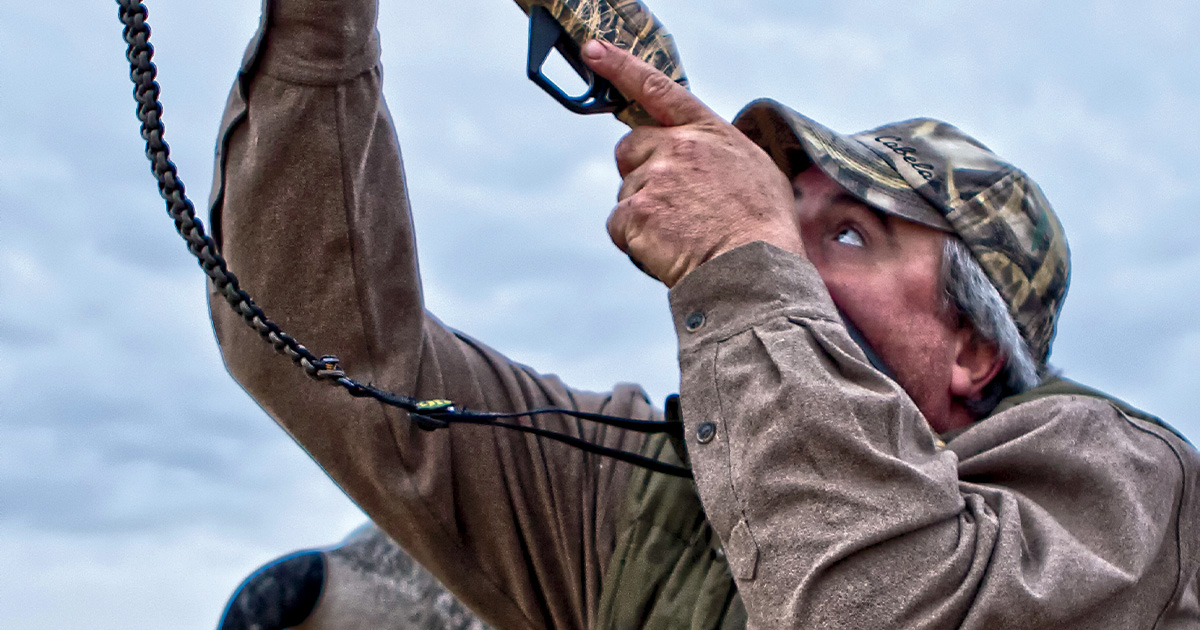
To stay at the top of their game, some pro athletes regularly train their eyes, using special exercises and equipment. Waterfowlers can benefit from a similar regimen.
The same eyes that make it possible to appreciate a sunrise or enjoy a graceful flight of working birds are a crucial part of your fire-control system when it comes time to shoot. The better the visual input, the better and faster your mind can compute tricky problems of angle, speed, distance, and lead.
Shotgun shooters, like athletes in other sports, can use tools to help train their vision. A Brock string is a 3- to 10-foot length of string with three to five colored beads on it at various distances. You attach one end to a wall or a doorknob and pull the other end taut to your nose. Shifting your focus from the closer beads to the farther beads and vice versa trains your eyes to work together, improving what’s known as “convergence.”
A Marsden ball is about the size of a baseball and has small numbers on it. You hang it from the ceiling and let it swing and turn. The idea is to pick a number on the ball and focus on it. This exercise helps you look for details on a moving object and trains your eyes to track moving targets.
Some pro athletes train with special “strobe glasses,” which alternate between clear and opaque, intermittently blocking their vision. The strobe effect forces the brain to fill in the gaps and anticipate movement. This technology can be helpful for shotgunners too.
There are also exercises that require no equipment at all. Stare at a point on a wall from several feet away. Without moving your eyes, try to pick out objects and colors at the edges of your vision. This will help improve the peripheral vision you need to spot ducks out of the corner of your eye.
Kerry Luft, a Level II sporting clays instructor and longtime waterfowler, says you can develop your vision and focus almost any time. For example, when you take a walk, focus on details of the birds you see. They don’t have to be gamebirds. “Try to pick out the black face of a male cardinal,” Luft says. “That’s the level of focus you’ll want for shooting ducks.”
Another important part of this process is training your eyes and hands to work together. Luft encourages his students to juggle. A set of juggling bean bags is inexpensive, and they won’t bounce away when you drop them. Keep them close and practice whenever you have a few minutes.
Dehydration affects your vision. If your duck camp routine consists of lots of alcohol in the evening and lots of caffeine in the morning, you’ll be hunting with eyes that aren’t fully hydrated, and your acuity and focus will suffer. Luft says drinking plenty of water before and during the hunt helps your eyes work at peak effectiveness.
Glasses with tinted lenses can help your eyes or they can make their job more difficult. Very dark glasses and mirrored shades shut out too much light. Luft uses tinted lenses only when he has to look directly into the sun. He says that gray lenses let all light through equally, and he’s not a fan of high-contrast lenses. “Seeing contrast doesn’t kill birds,” he says. “Seeing detail does.”
Your eyes will only make you a better shot if you use them correctly. Exercises improve your ability to focus, but focusing always requires a conscious effort. “You have to tell yourself to focus,” Luft says. “That’s not bad, because it gives your conscious mind something to do while your subconscious mind guides your hands.”
Luft says we can only maintain very intense focus for a fraction of a second. When you stand to shoot, pick a bird, move the gun with it, and then, before you pull the trigger, dial your focus down onto the bill, an eye, or a cheek patch. “Sometimes you can’t see details because of the light conditions,” he says, “but the important thing is that you’re trying to make out details. That means you’re looking at the bird as hard as you should be.” That kind of focus can make all the difference.

Share this photo


Ducks Unlimited uses cookies to enhance your browsing experience, optimize site functionality, analyze traffic, and deliver personalized advertising through third parties. By continuing to use this site, you agree to our use of cookies. View Privacy Policy