Field Reports: Winter Habitat Outlook
An overview of wetland conditions in key areas for North America’s waterfowl
An overview of wetland conditions in key areas for North America’s waterfowl


By DU Field Biologists
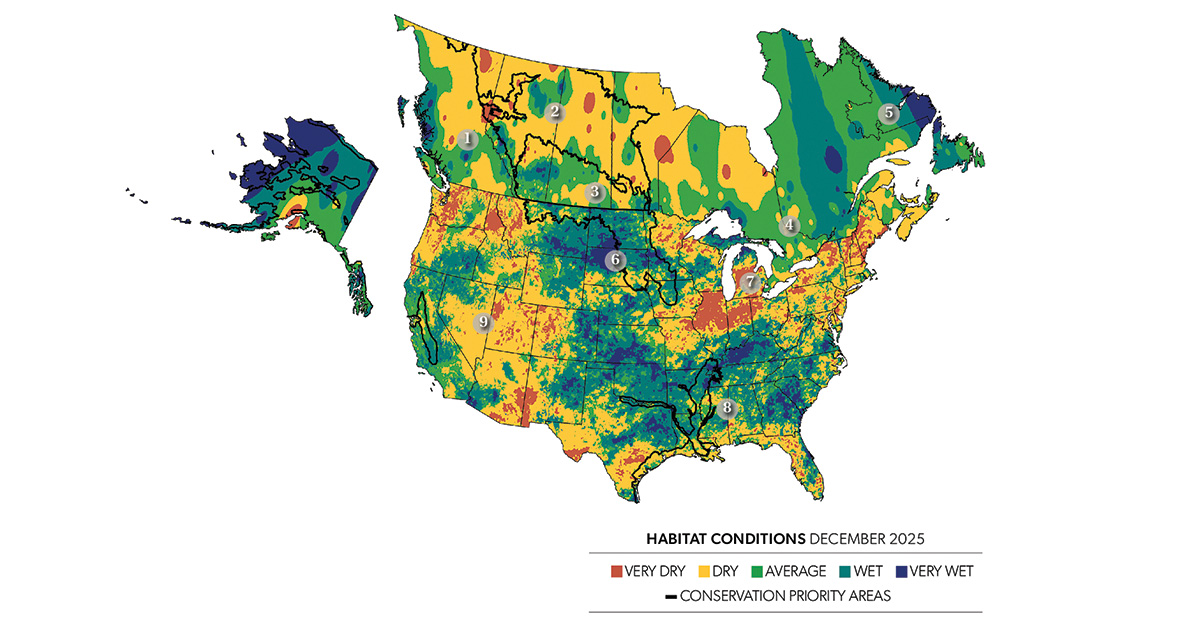
DATA SHOWS PALMER DROUGHT INDICES WITH CATEGORIES CONSOLIDATED AND COLORED TO MATCH CURRENT CONDITIONS. CLIMATE ENGINE. 2025; DESERT RESEARCH INSTITUTE AND UNIVERSITY OF IDAHO. ACCESSED ON DECEMBER 2, 2025; HTTP://CLIMATEENGINE.ORG; NOAA NATIONAL CENTERS FOR ENVIRONMENTAL INFORMATION AND AGRICULTURE AND AGRI-FOOD CANADA.
Fall temperatures in British Columbia were several degrees warmer than average this fall, and below-average precipitation and low soil moisture left many wetlands below capacity at freeze-up. The southern coast experienced a fairly typical fall, and the migration peaked in October. Waterfowl numbers remain high in coastal wetlands and on adjacent agricultural lands.
Fall temperatures were above average across much of this vast region. Precipitation was below average in northern portions of the prairie provinces and above average in the northern territories. However, even in areas that received plentiful precipitation, drought conditions persisted at freeze-up. The fall migration was wrapping up in late November as the last divers and sea ducks headed south.
Fall precipitation was average or slightly below average across much of Prairie Canada. Deeper, more permanent wetlands retained water reasonably well throughout the fall, providing crucial staging habitat for waterfowl. However, most seasonal wetlands are currently dry, and significant winter snowfall will be needed to recharge these important breeding habitats next spring. The migration was protracted this fall, and many birds stayed later than usual, with some ducks and geese lingering on remaining open water well into November. Anecdotally, duck numbers appeared to be below average this fall while goose numbers remained similar to previous years.
Despite warm fall temperatures, welcome precipitation helped mitigate drought conditions and refilled wetlands across Ontario and Quebec. The migration started slow but gained momentum in November as progressively colder temperatures gripped the region. By early December, many wetlands were frozen, pushing remaining migrants to the Great Lakes and points south.
After a very dry summer and early fall, wetland and groundwater levels have started to recover in this region. Cold temperatures in late November froze freshwater lakes, ponds, and marshes, forcing many waterfowl south or to the coast. American black ducks and mallards are making good use of tidal rivers and salt marshes, and Canada geese remain abundant in agricultural areas.
Temperatures across the northern plains remained unseasonably warm until late November, when significantly colder weather and variable amounts of snowfall hit the region. By early December, plunging temperatures froze wetlands, smaller lakes, creeks, and portions of larger rivers, prompting an exodus of waterfowl from the region. Wetland conditions and soil moisture improved across the Dakotas this fall thanks to consistent precipitation.
October and November temperatures were two to five degrees above normal across the Great Lakes and northeastern United States, delaying the migration for many waterfowl species. Abnormally dry to extreme drought conditions continue to grip parts of these regions, and ample winter precipitation will be needed to improve spring habitat conditions for the upcoming breeding season.
In Texas, drought persists along the Gulf Coast and in eastern portions of the state, while better wetland conditions are found in the Panhandle. South Louisiana is dry in the agricultural zone, but coastal wetlands remain in good to excellent condition. According to aerial surveys, November duck numbers in Louisiana were at the highest levels since 2021. Early cold fronts have pushed waterfowl into the lower Mississippi Alluvial Valley, and November duck numbers in Mississippi were above average despite dry conditions in the Delta. Drought continues to impact the South Atlantic region, but coastal habitats remain in good shape and are holding waterfowl in many areas.
Habitat conditions across much of the West have improved, including in the Klamath Basin, where refuge wetlands continue to hold water and support large numbers of waterfowl. In the Central Valley, wet weather has dispersed waterfowl on recently flooded habitats. In the Pacific Northwest, migrating waterfowl have arrived with cooler weather and are building in traditional areas, especially along the coast.

Share this photo


Ducks Unlimited uses cookies to enhance your browsing experience, optimize site functionality, analyze traffic, and deliver personalized advertising through third parties. By continuing to use this site, you agree to our use of cookies. View Privacy Policy