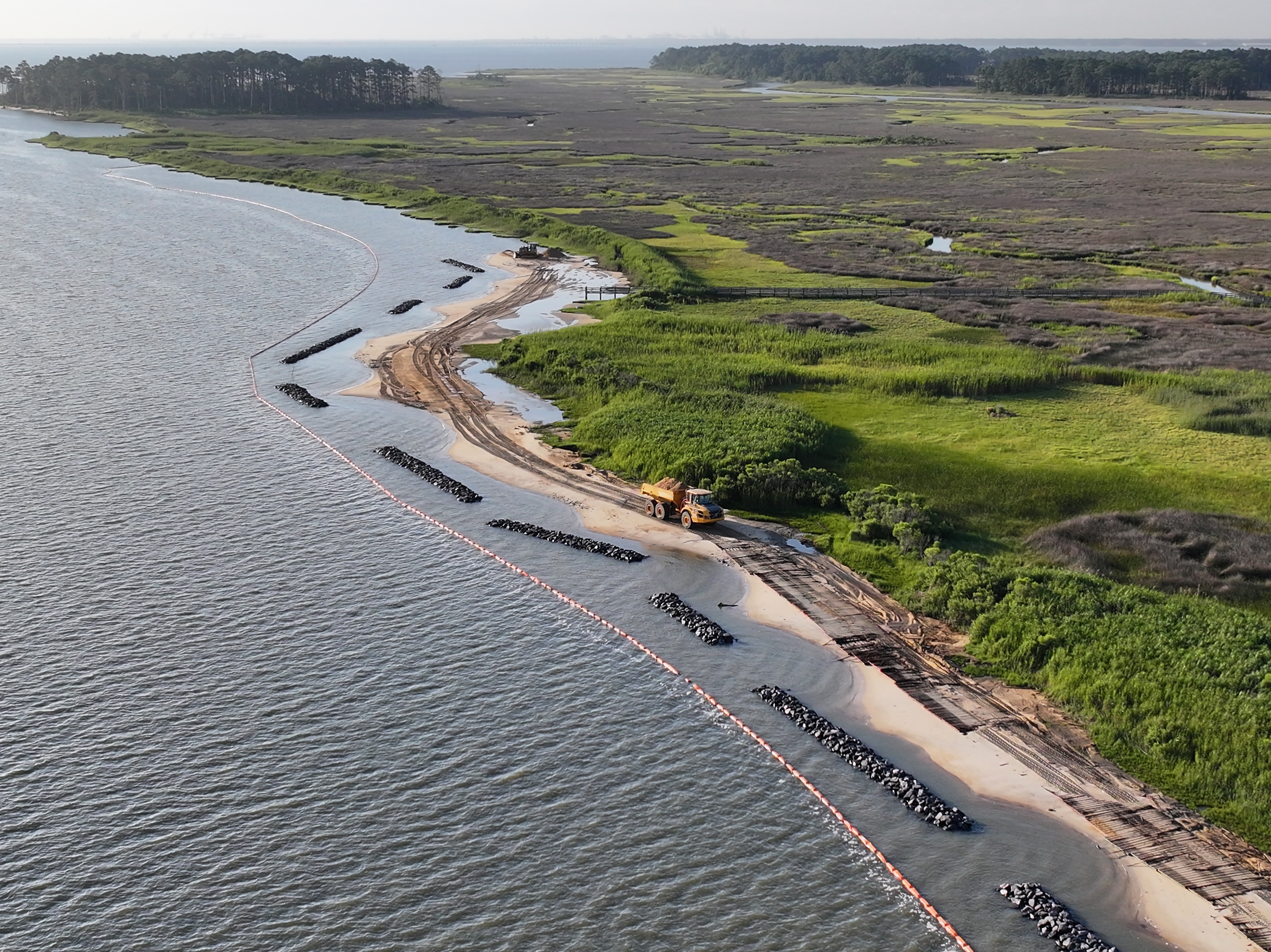
Ragged Island Wildlife Management Area (WMA), located along the James River in Isle of Wight County, Virginia, is a vital piece of coastal habitat. Its extensive marshes not only provide critical feeding and nesting grounds for waterfowl, shorebirds, and countless other species, but they also deliver natural benefits to people by filtering water, buffering storm surge, and offering exceptional outdoor recreation opportunities for the nearby Hampton Roads community.
Unfortunately, this area has been under siege from severe shoreline erosion, which threatens the integrity of the marsh and accelerates habitat loss. To combat this, Ducks Unlimited partnered with the Virginia Department of Wildlife Resources to implement a living shoreline solution. The project included installing breakwaters and oyster reefs to stabilize approximately 1.2 miles of shoreline while creating new marsh in the backfill area. These enhancements will not only protect existing habitat but also foster biodiversity by supporting oysters, fish, and other aquatic life, improving water quality, and strengthening resilience against sea-level rise.
Partnerships were the cornerstone of this effort. DU worked closely with NOAA Fisheries, Christopher Newport University, and local stakeholders to ensure the design incorporated cutting-edge science and community priorities. Technical experts guided the integration of resilience measures to withstand future climate challenges, while community feedback helped shape a project that benefits both wildlife and people.
“This project is a great example of what can be accomplished when partners come together with a shared vision,” said Ed Farley, Ducks Unlimited’s Manager of Conservation Programs for Virginia, North Carolina, South Carolina, and Georgia. “By protecting Ragged Island, we’re not only preserving critical habitat for waterfowl and other wildlife but also ensuring that local communities continue to enjoy the natural benefits these marshes provide.”
Construction of the breakwater was completed the fall of 2025, and marsh vegetation will be planted in early 2026, creating a thriving ecosystem that supports waterfowl, fisheries, and outdoor recreation for generations to come. “Collaborating with Ducks Unlimited and our federal and community partners has been invaluable,” said Virginia Department of Wildlife Resources Executive Director Ryan Brown. “Together, we've been able to apply the latest shoreline science and respond to community concerns—resulting in a living shoreline that enhances habitat and supports the recreational pursuits of our constituents.”
Funding from the NOAA Transformational Habitat Grant program and the James M. Cox Foundation made this ambitious project possible, underscoring how collaboration and shared vision can restore and protect our most vulnerable coastal habitats