From Shotgun to Spotting Scope: Becoming DU Citizen Scientists for Emperor Geese
How DU volunteers turned their passion for hunting into hands-on conservation for the Emperor Goose
How DU volunteers turned their passion for hunting into hands-on conservation for the Emperor Goose


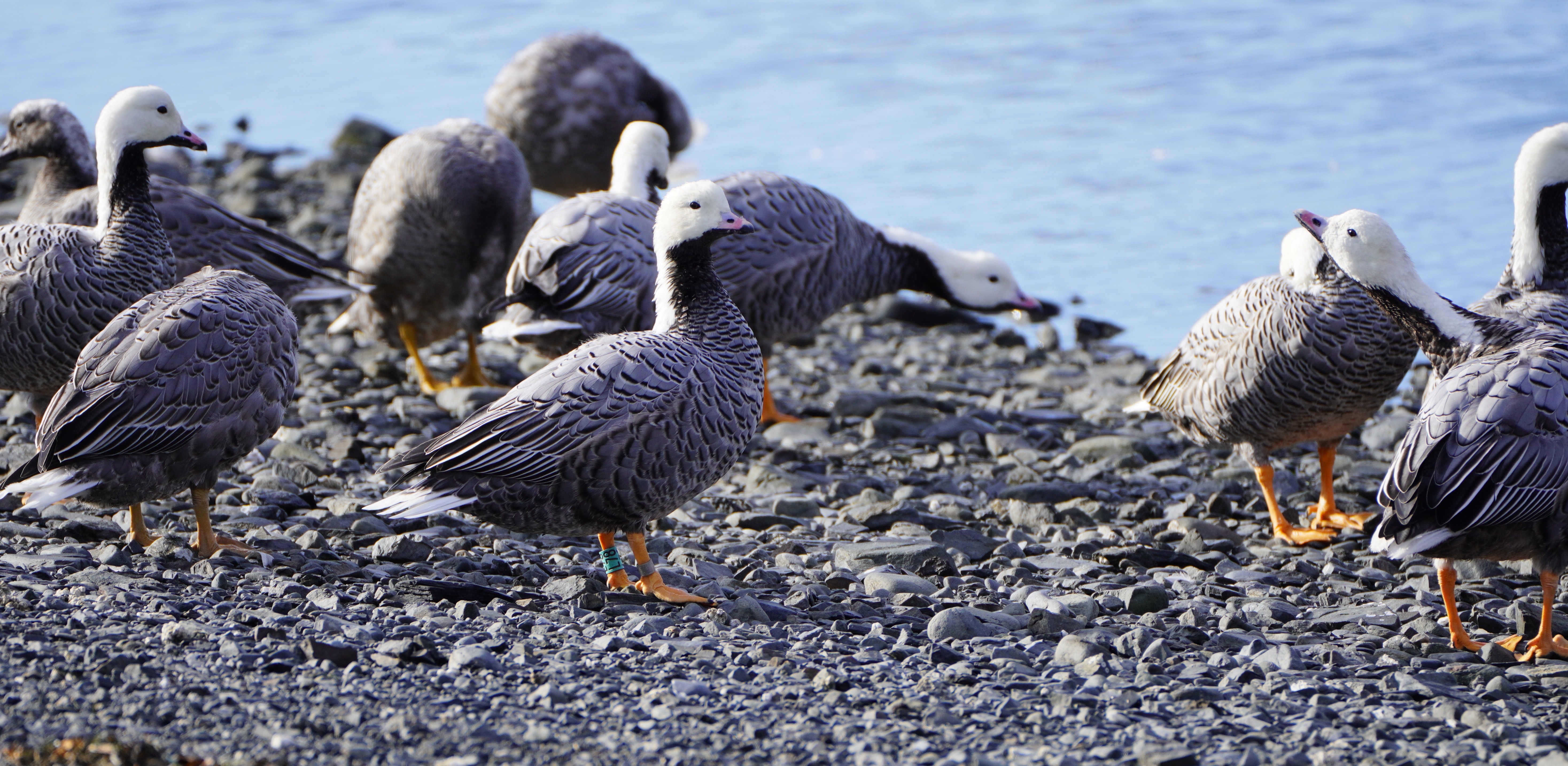
When the duck hunting season ended in January 2025, Ducks Unlimited’s (DU) Alaska State Chair Tim Truitt and Alaska DU Youth Engagement Chair Justin Talley experienced a lightbulb moment while listening to a DU podcast about bird banding and the idea of “citizen scientists.” The realization struck: the end of hunting season didn’t have to mean the end of engaging with wildlife. Hunters could trade their shotguns for cameras and spotting scopes, contributing directly to conservation efforts for Emperor Geese.
In Truitt and Talley’s case, this meant providing valuable information for managing Emperor Geese after the season was recently closed for “emps”, as Alaskans call them, because of low population counts.
Nearly all Emperor Geese nest on Alaska’s Yukon-Kuskokwim Delta and winter along the Alaska Peninsula, the Aleutian Islands, and Kodiak Island. While on the Y-K Delta, many adult and juvenile geese are captured and fitted with plastic legs bands that have a 3-digit identification code.
In February 2025, Truitt and Talley began re-sighting banded Emperor Geese to help monitor their population, survival rates, and migratory patterns, critical data for managing this vulnerable species. They meticulously recorded sighting details, including dates and locations, and paired them with original banding data such as banding date and location. By adding photographs of the geese and compiling everything into a centralized database, Truitt and Talley helped make this information easily accessible to biologists studying the species.
When the Emperor Geese returned to Kodiak from their breeding grounds in the fall of 2025, Truitt and Talley resumed their re-sighting efforts. These post-migration observations offered valuable insights into migratory routes and key habitats used by both adult and juvenile geese throughout their annual cycle.
Through their consistent re-sighting of banded geese, Truitt and Talley contributed to estimating survival probabilities, a key factor in understanding population dynamics. Their efforts as citizen scientists extended their connection to the outdoors well beyond hunting season and played a vital role in the conservation of the Emperor Goose, demonstrating that anyone with a passion for wildlife can make a meaningful impact.
Ducks Unlimited Inc. is the world's largest nonprofit organization dedicated to conserving North America's continually disappearing wetlands, grasslands and other waterfowl habitats. Established in 1937, Ducks Unlimited has restored or protected more than 19 million acres thanks to contributions from more than a million supporters across the continent. Guided by science, DU’s projects benefit waterfowl, wildlife and people in all 50 states. DU is growing its mission through a historic $3 billion Conservation For A Continent capital campaign. Learn more at www.ducks.org.
Media Contact:
Molly Jarone
(916) 903-9199
mjarone@ducks.org

Share this photo


Ducks Unlimited uses cookies to enhance your browsing experience, optimize site functionality, analyze traffic, and deliver personalized advertising through third parties. By continuing to use this site, you agree to our use of cookies. View Privacy Policy